Browsing: COVID-19 Pandemic

The latest news effecting cancer patients and oncology service delivery during the COVID-19 pandemic

Welcome to Episode of 21 The Oncology Journal Club focused entirely on COVID-19 with Special Guest Professor Raina MacIntyre. In today’s special COVID-19 Update episode, Eva Segelov chats once again to Professor Raina MacIntyre. Raina heads the Biosecurity Program at the Kirby Institute, which conducts research in epidemiology, vaccinology, bioterrorism prevention, public health and clinical trials in infectious diseases. She is one of the world’s leading authorities on pandemics so we’re very lucky to have her take on COVID-19 globally, the vaccines and how these will impact cancer patients, the importance of ventilation and much more. She also offers very…
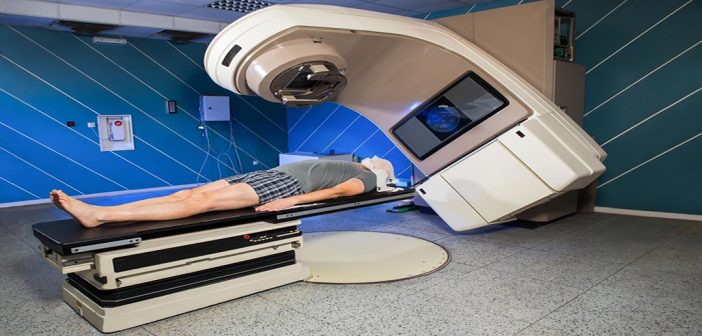
Dramatic changes were seen in the delivery of radiotherapy treatments for cancer during the first wave of the coronavirus pandemic in England. Much shorter radiotherapy courses were delivered, treatments were delayed where it was safe to do so and some increases were seen in order to compensate for reduced surgical capacity. Experts believe the changes reflect an impressive adaption of services by the NHS, and that the overall impact on cancer outcomes is likely to be modest. The new research, led by the University of Leeds, with Public Health England and the Royal College of Radiologists, UK, reveals that there…

In one of the first studies to examine the impact of the COVID-19 pandemic on cancer diagnoses, researchers at Dana-Farber/Brigham and Women’s Cancer Center, USA, document a substantial decline in cancer and precancer diagnoses at the Northeast’s largest health care system during the first peak of the pandemic because of a drop in the number of cancer screening tests performed. The findings, which confirm concerns that COVID-related restrictions may have delayed the detection and treatment of many cancers, were moderated somewhat by data showing that cancer screenings and diagnoses at the healthcare system largely rebounded to pre-pandemic levels in the…

Overall cancer death rates in the United States dropped continuously from 1991 through 2018 for a total decrease of 31%, including a 2.4% decline from 2017 to 2018. The news comes from the American Cancer Society’s annual Cancer Statistics, 2021 article, appearing in CA: A Cancer Journal for Clinicians, and its consumer version, Cancer Facts & Figures 2021. This year marks the American Cancer Society’s 70th anniversary of reporting this data to inform the nation’s fight against cancer. The report estimates that in the U.S. in 2021, almost 1.9 million (1,898,160) new cancer cases will be diagnosed and 608,570 Americans will die…

Patients and healthcare providers at the Princess Margaret Cancer Centre, Canada, rated virtual care during COVID-19 as highly satisfactory overall for quality of care and convenience, while at the same time saving patients millions in costs. Research led by Princess Margaret Radiation Oncologist Dr. Alejandro Berlin showed that virtual care can be implemented rapidly and safely across a highly-specialised and high-volume cancer centre. Eighty (80) per cent of patients reported they were either very satisfied or satisfied with it, citing convenience as a main factor, with 72 per cent of physicians reporting similar satisfaction with it. Moreover, 64 per cent…

A new study funded by Cancer Research UK shows that the immune response to COVID-19 is the same in people with solid tumours compared to those without cancer. However, blood cancer patients varied in their ability to respond to the virus, with many unable to shake off the virus for up to 90 days after the first signs of infection – around 5 times longer than the average. Due to the importance of sharing findings related to the pandemic, the publication has been fast-tracked online as a preprint in Cancer Cell. The study gives reassurance to many people with cancer, but…

When the pandemic hit the U.S. in early 2020, many routine activities came to a halt. The same occurred with doctors’ visits — regular checkups and screening for many health conditions. A recent study led by University of Cincinnati Cancer Center, USA, researchers shows the impact the pandemic had on lung cancer screening, which experts say could be bad for both screening programs in general and for the overall well-being of patients. The article appears on the website of the Journal of the American College of Surgeons in advance of print. Robert Van Haren, MD, assistant professor of surgery at UC, a…

A recent international observational study provides important data on the safety of head and neck cancer surgery during the COVID-19 pandemic. The findings are published early online in CANCER, a peer-reviewed journal of the American Cancer Society. The study is part of the COVIDSurg Collaborative, an initiative to describe surgical practices during the early period of the pandemic, when many hospitals had limited capacity and when it was unclear whether it was safer to delay or continue in-hospital cancer treatments. “The problems were particularly acute in head and neck cancer surgery because for many cases, cure is dependent on surgery, but there…

Income level, employment, housing location, medical insurance, education, tobacco and alcohol use, diet and obesity, access to medical care. These are some of the factors causing worse cancer outcomes in people who are Black. The same factors are also causing worse outcomes from COVID-19 in this population. “The similarities between COVID-19 issues and cancer disparities is uncanny,” says John M. Carethers, M.D., John G. Searle Professor and Chair of Internal Medicine at Michigan Medicine, USA. “In cancer we are seeing in slow motion what has been observed rapidly with COVID — that the same conditions in our society put specific…

The current surge in coronavirus disease 2019 (COVID-19) cases poses challenges for providers and institutions in delivering care to infected patients while also placing demands on them to keep up with timely and sometimes critical care for patients with cancer, heart disease and other serious illnesses who might experience advanced complications and/or earlier death if they have lapses in their care. Reporting on how deferred care worsened outcomes for lung cancer patients when the COVID-19 pandemic first surged in the spring of 2020, researchers from the University of Cincinnati, USA, explained that they have identified a framework that could help…

1 9 10 11 12 13 20