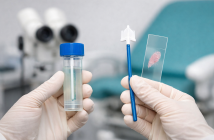


A new nationwide survey of general practitioners (GPs) has highlighted a gap in awareness and understanding of HPV extended genotyping, a critical advancement in cervical screening that could help further reduce Australia’s cervical cancer burden.
Despite Australia’s success as a world leader in cervical cancer prevention, recent data indicate that many GPs remain unfamiliar with the clinical utility of extended HPV genotyping, which provides more detailed information about high-risk HPV serotypes beyond HPV16 and HPV18. This information can support more precise risk stratification and management of patients with HPV infections.
Strong uptake of self-collection, but some misconceptions remain
The survey found that 9 in 10 GPs now offer self-collected HPV tests as part of cervical screening, with almost half (49%) of those allowing patients to complete the test at home. Those allowing patients to take the test home cited convenience and patient preference as key drivers.
However, alarmingly, 1 in 10 GPs still do not offer self-collection, most commonly due to the perception that self-collected tests are less accurate. Evidence shows that validated PCR-based self-collection, such as the BD OnclarityTM HPV Assay, is comparable in sensitivity and specificity to clinician-collected samples.
Some respondents expressed concerns about potential user error in HPV self-collected tests. Still, research indicates that with adequate health education, women who received clear instructions and educational support reported high confidence and satisfaction with self-collection methods.
Getting ahead with extended genotyping
Since Australia transitioned to HPV-based cervical screening in 2017, clinical guidelines have evolved to include partial genotyping. Current practice aligns with these recommendations; however, there’s now an opportunity for healthcare providers to build confidence in extended genotyping and prepare for the next steps in cervical screening.
Countries with similar healthcare systems, such as the Netherlands and Sweden, are already integrating extended genotyping into national programs to enhance risk stratification and triage. Australia can position itself to follow in the footsteps of these international leaders and ensure its screening program evolves with the best available science.
However, while interest in extended genotyping is growing, many GPs report limited exposure and support to engage with it confidently:
- 82% of GPs reported they were only somewhat or not familiar with HPV extended genotyping.
- Just 6% had used extended genotyping in practice.
- Only 5% had discussed it with patients.
- 94% said they were not or only somewhat confident in explaining the benefits of extended genotyping.
Dr Lara Roeske, General Practitioner and former Chair of the Royal Australian College of General Practitioners (RACGP), said:
“Extended genotyping enables clinicians to identify and monitor individual high-risk HPV types, offering more nuanced guidance for follow-up and treatment decisions. However, the survey findings show that many GPs are not confident in interpreting these results or explaining their significance to patients.”
Genetic testing can transform surgical decisions and family risk assessment. New tools are making it easier for all clinicians to integrate testing without specialist referrals.

Listen Now | Exclusive to The Oncology Network
When asked what resources would help them integrate self-collected extended genotyping into practice, GPs prioritised:
- Clear patient guidance materials on how to self-collect correctly
- Follow-up protocols for managing positive or inconclusive results
- Training resources and decision-support tools
- Clarification on Medicare reimbursement and screening guidelines
HPV extended genotyping has the potential to improve the detection of persistent infections and support more individualised care pathways. As Australia moves toward the World Health Organisation (WHO) goal of eliminating cervical cancer as a public health problem, equipping GPs with the knowledge and confidence to use this technology is essential.
“We have an opportunity to close this gap and further strengthen our screening program,” Dr Roeske said. “Supporting GPs through education, guidelines, and practical tools will be vital to achieving the best possible outcomes for women.”
References:
- Australian Institute of Health and Welfare. (2023). National Cervical Screening Program monitoring report 2023. AIHW. Access online here.
- Stoler, M. H., Parvu, V., Yanson, K., Andrews, J., & Vaughan, L. (2023). Risk stratification of HPV-positive results using extended genotyping and cytology: Data from the baseline phase of the Onclarity trial. Gynecologic Oncology, 174, 68–75. Access online here.
- Stoler, M. H., Austin, R. M., Zhao, C., Wright, T. C., Ferenczy, A., Bergeron, C., … & Castle, P. E. (2021). Performance of the BD Onclarity HPV Assay on self-collected vaginal samples compared to clinician-collected cervical samples. Journal of Clinical Microbiology, 59(1), e01719-20. Access online here.
- Nishimura, H., Yeh, P. T., Oguntade, H. A., Kennedy, C. E., & Narasimhan, M. (2021). HPV self-sampling for cervical cancer screening: A systematic review of values and preferences. BMJ Global Health, 6(5), e003743. Access online here.
- Helenius, G., Lillsunde-Larsson, G., Karlsson, M. G., Kaliff, M., & Bergengren, L. (2025). Cervical screening with self-sampling for postmenopausal women with molecular triage using extended genotyping and methylation. European Journal of Obstetrics & Gynecology and Reproductive Biology, 305, 404–409. Access online here.