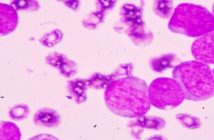

Researchers have developed a new fluorescent label that gives a clearer picture of how DNA architecture is disrupted in cancer cells. The findings could improve cancer diagnoses for patients and classification of future cancer risk. Published today in Science Advances, the study found that the DNA-binding dye performed well in processed clinical tissue samples and generated high-quality images via superresolution fluorescence microscopy.
Inside the cell’s nucleus, DNA strands are wound around proteins like beads on a string. Pathologists routinely use traditional light microscopes to visualize disruption to this DNA-protein complex, or chromatin, as a marker of cancer or precancerous lesions.
“Although we know that chromatin is changed at the molecular scale during cancer development, we haven’t been able to clearly see what those changes are. This has bothered me for more than 10 years,” said Liu, who is a member of the UPMC Hillman Cancer Center in the USA. “To improve cancer diagnosis, we need tools to visualise nuclear structure at much greater resolution.”

In 2014, the Nobel Prize-winning invention of superresolution fluorescence microscopy was a major step towards making Liu’s vision reality. A molecule of interest is labelled with a special fluorescent dye that flashes on and off like a blinking star. Unlike traditional fluorescence microscopy, which uses labels that glow constantly, this approach involves switching on only a subset of the labels at each moment. When several images are overlayed, the complete picture can be reconstructed— at a much higher resolution than previously possible.