

Today, small kidney tumours are most often treated with a minor operation in which all or part of the kidney is removed.
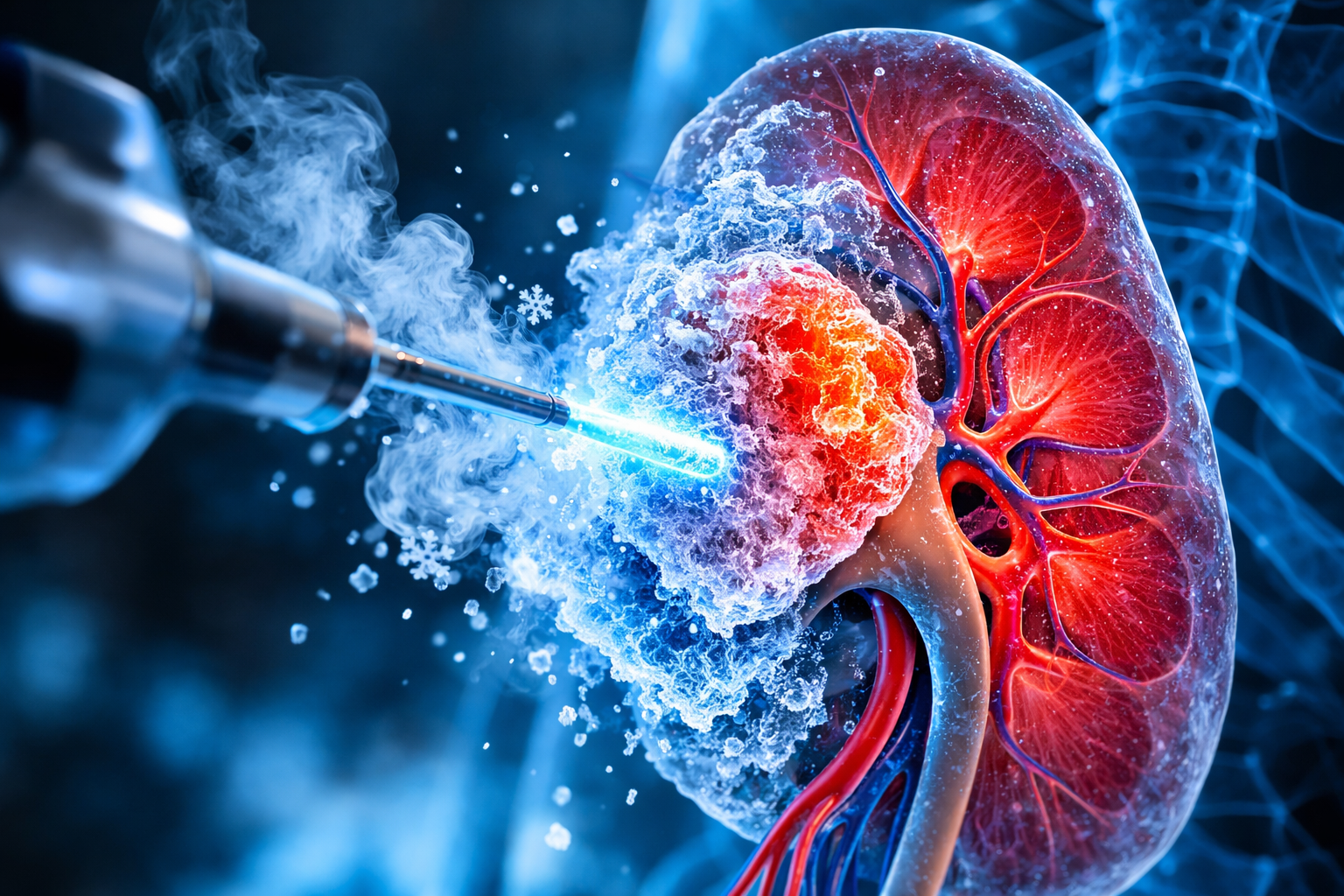
However, in many cases, these small tumours can be treated with targeted cryotherapy, which destroys the cancer cells.
Quite literally, it’s a needle-prick procedure when patients, instead of undergoing the classic keyhole operation, have their small kidney tumours frozen away using so-called cryoablation.

Featured Event
Thin needles are inserted through the skin into the kidney and precisely target the cancer cells, which are then frozen until they are destroyed.
The treatment has proven both effective and gentle, explains Associate Professor Iben Lyskjær from the Department of Clinical Medicine at Aarhus University:
“The procedure is generally less invasive than surgery and has less impact on kidney function. At the same time, hospital stays are typically short so that many patients can be discharged the same day. There are, therefore, many advantages to using cryoablation in selected patients,” she says.
Iben Lyskjær’s team has just published a nationwide study on cryoablation of small (T1a) kidney tumours in the scientific journal Radiology.
According to the study, one advantage is that cell freezing can be repeated several times, precisely because doctors do not remove part or all of the kidney during the procedure, says Iben Lyskjær.
When patients are diagnosed with cancer, there are often several main priorities.
One is treating the cancer itself; the other is ensuring it does not spread further.
For this reason, surgeons often remove all or part of the kidney when operating to remove the cancer cells.
However, according to Iben Lyskjær, patients need not fear that freezing the cells poses a greater risk of the cancer spreading to other organs.
“The treatment is effective and safe. There is no greater risk of spread than with surgery,” she explains.
However, some patients may need their cells frozen more than once.
“There is a small risk that the treatment will need to be repeated at a later stage. That is why it is important that patients are followed up afterwards. For many patients, this represents a good balance between gentle treatment and cancer control.”
Not all kidney tumours can be treated by freezing. If the tumour has grown too large (more than 4 cm), doctors will still recommend surgery. Likewise, some tumours may be located in a position that is difficult to access with needles.
Therefore, cryoablation is not a replacement for surgery, says Iben Lyskjær.
“We hope that the study can give patients and doctors greater confidence in choosing a less invasive treatment when appropriate. The aim is not to replace surgery, but to ensure that patients receive the treatment best suited to their disease and overall health,” she says.
In addition, the research group behind the study hopes that the results will contribute to analyses and discussions that form the basis of both Danish and international guidelines for the treatment of kidney cancer.
Source: Aarhus University