

The 2021 ANZUP Annual Scientific Meeting (ASM) was held on Sunday 17 October and Monday 18 October 2021.
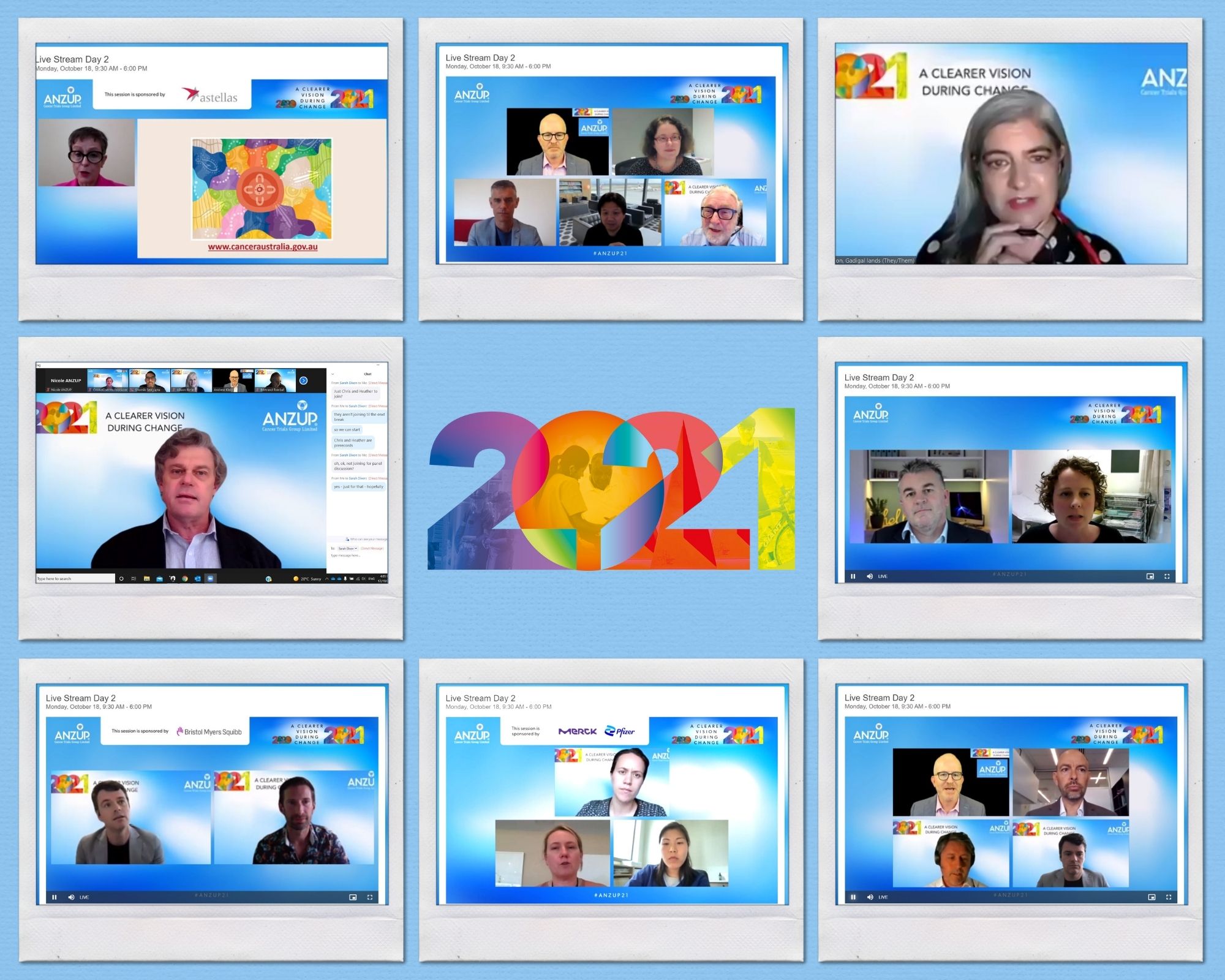
Initially this meeting was to be face-to-face in Adelaide, but again was held as a two-day virtual event. #ANZUP2021 ASM took the format of a two-day condensed meeting, with an interactive virtual meeting platform and virtual hubs in Perth, Brisbane and Adelaide. With over 400 delegates attending the meeting ANZUP welcomed a superb international and national faculty.
The ASM provided a platform to discuss and present the latest updates in GU cancer treatment, research and supportive care and to learn more about existing and planned ANZUP trials.
The program kicked off with a Nurses and Allied Health Session where a panel explored the challenges faced when undertaking nursing research and how best to establish a pathway to streamline the research process. This was a fantastic session with some insightful advice and shared experience.

We also saw the return of the ever-popular Multidisciplinary (MDT) Masterclass. The afternoon was convened by Dr Carole Harris and the panels were broken up by disease type – early prostate, renal cell carcinoma, germ cell carcinoma, bladder urothelial and penile cancer, concluding with advanced prostate cancer. Each endeavoured to educate the audience with real-life clinical challenges and audience polling.
On the Sunday afternoon ANZUP hosted a ‘virtual’ welcome drink session and held the first of the fabulous international keynote faculty presentations with Bertand Tombal chairing the session, ‘Clearer Vision’, with Chris Parker, Heather Payne and Alison Birtle.
Professor Chris Parker spoke on ‘How MRI became the mainstay of active surveillance’. He began by discussing watchful waiting based on data “from the last century”. He described watchful waiting as a “worst case scenario”, indicative of the natural history of untreated. So, outcomes for patients treated with active surveillance can only have a better outcome. He went on to outline how cancers diagnosed today will have a better natural history given the increased use of PSA testing, more use of MRI, changes in biopsy technique, and changes in Gleason score.
Professor Heather Payne then gave the presentation, ‘The trials and tribulations of managing men with metastatic hormone sensitive prostate cancer.’ Dr. Payne commenced by highlighting the importance of treating men with mHSPC: while treatment with androgen deprivation therapy (ADT) provides initial responses, progression is common, and a large proportion of prostate cancer-related deaths occur among men initially diagnosed with metastatic disease (40%) despite this comprising 13% of men diagnosed with prostate cancer.
Dr Alison Birtle gave the last presentation in this session called, ‘Wishful thinking’. She discussed what she described as wishful thinking in genitourinary oncology, with a focus on optimal therapy for systemic therapy in upper tract urothelial carcinoma (UTUC).
Day two of the ASM began with the second stellar line up of international guests. Christopher Sweeney chaired the session with three thought-provoking presentations from Eli Van Allen, Matt Galsky and Sima Porten where they explored ‘Horizon scanning the future is better than 20/20 vision’.
Professor Eli Van Allen spoke about ‘Artificial intelligence, its application to cancer research, and how it will change how we treat GU Cancer.’ Dr. Eli Van Allen discussed the convergence of machine learning and genomics for precision cancer medicine in genitourinary cancers and beyond. As both a medical oncologist and a clinician he utilises computational biology to assess canceromic biology for the improvement of cancer outcomes.
Next the delegates heard from Professor Matt Galsky speaking about ‘Evolving treatment landscape for metastatice urothelial cancer.’ Dr. Galsky started by highlighting that urothelial carcinoma is not an uncommon malignancy, accounting for 82,000 new diagnoses per year in the United States and approximately 429,000 new diagnoses per year worldwide. However, until recently, the FDA approvals for new therapeutics in urothelial cancer over the last 30 years has been less than ideal.
The great line up of international speakers concluded with a presentation given by Associate Professor Sima Porten speaking about, ‘Molecular subtypes in MIBC – Moving toward better patient selection for treatment.’
Next was the ANZUP Symposium comprised of a panel of national speakers who explored ‘Disparities in Cancer Care.’ Gail Garvey, Daniel Lindsay and Dorothy Keefe gave extremely interesting and thought-provoking presentations highlighting the need for ongoing research, support and improved outcomes in Aboriginal and Torres Strait Islander communities.
ANZUP trial updates and next steps, what is happening next for ANZUP trials was then presented. This was again broken into cancer type – prostate, germ cell carcinoma, bladder urothelial and penile cancer, renal cell carcinoma. There was also an update from the Consumer Advisory Panel (CAP) group, composed of individuals with personal or indirect personal experiences with cancer who contribute expertise with diverse disease-related experience.
The second half of the day included a virtual poster discussant room and ANZUP awards including the Below the Belt Research Fund Awards and Best of the Best again held.
The final session of the ASM was an entertaining crossfire debate, ‘No time to lose: to improve survival we can’t wait for data on overall survival’, given by Associate Professor David Pryor and Associate Professor Dave Pook. Dr. Pryor argued the affirmative, that waiting for overall survival data is both unnecessary and potentially harmful. Dr. Pook argued that we may wait for overall survival but highlighted three questions that he considered relevant: (1) Is there a clear line of site [from surrogates]to a worthwhile OS benefit?; (2) Is there at least improved quality of life? (3) Is the treatment cost-effective?
The convening committee displayed an extraordinary commitment to developing another world-class educational, inspirational and captivating program. This meeting was only possible thanks to the support of all sponsors including Cancer Australia, who provide key infrastructure funding to ANZUP.
ANZUP is already planning the next ASM and hopes you can join them 10 – 12 July 2022 in Adelaide at the Adelaide Convention Centre.
Source: ANZUP


