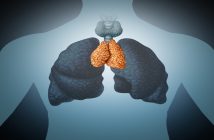
ICB therapy, which stands for immune checkpoint blockade, has become the standard treatment for lung cancer due to its generally positive outcomes. Thus far, high levels of the PD-L1 protein have been the primary means of predicting a positive treatment response. However, many lung cancer tumours have inherently high levels of this protein and still fail to respond to ICB, while others with low levels of the very same protein do respond. Identifying which patients will respond strongly in advance could save valuable time and help patients live longer and healthier lives.
LISTEN EXCLUSIVELY ON THE ONCOLOGY NETWORK

LISTEN TO EPISODE 3: TISSUE ACQUISITION – HOW TO DO IT BETTER WITH LLOYD RIDLEY AND NICK WILSMORE
The ICB treatments inhibit the action of PD-L1 and its partner PD1, to increase the action of the immune system against the tumour cells. These two proteins are part of a natural system to avoid autoimmunity, with PD-L1 being typically present in the membrane of the cells (including cancer cells) and, through the interaction with its partner PD-1, present in immune cells, prevent an overaction of the immune system that can be detrimental for the organism. In the context of a tumour, this results in the immune system not killing cancer cells, hence why the ICB treatment attempts to block this contact.
On the other hand, tumours are found with low levels of PD-L1. Without this immune-limiting trick, how are they avoiding a strong immune attack? In a recent publication at the scientific journal Cell Reports Medicine, the team led by Dr. Sanchez-Cespedes reports that many of the tumours with low PD-L1 have developed genetic strategies that avoid the action of the gamma interferon against the tumour cells. The gamma interferon is a powerful stimulator of the immune response secreted by immune cells and, avoiding its action, the tumour cells cannot be killed by the immune system.
One of these genetic strategies found in tumour cells is the activation of the oncogene MYC, that leads to a cascade of events that prevent the action of the gamma interferon inside the cell. Experimental results show that this could be a strong and reliable predictor of response to ICB in cancer patients, as tumours with MYC genetic activation are associated with a poorer prognosis after treatment with ICBs.

The new findings reported might inspire new clinical trials to assess whether MYC status can be a better marker than PD-L1 abundance to select patients for ICB or similar treatments and make a difference in the clinical management of lung cancer in the near future.
Source: Alburquerque-Bejar JJ, Navajas-Chocarro P, Saigi M, et al. MYC activation impairs cell-intrinsic IFNγ signaling and confers resistance to anti-PD1/PD-L1 therapy in lung cancer. Cancer Res Med. 2023. doi: 10.1016/j.xcrm.2023.101006