

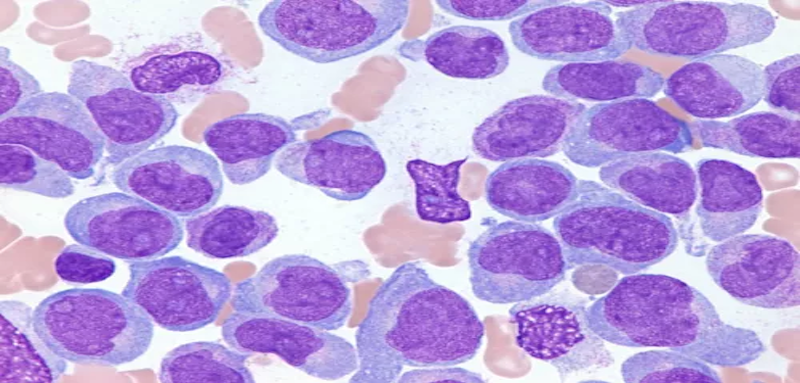
Selenium-enriched diets may help ward off myeloid leukaemia, and a new study led by researchers in Penn State’s College of Agricultural Sciences (USA) has described the mechanism by which this occurs.
The findings, published in Cell Reports, eventually could help lead to drug therapies that target some types of leukaemia — including acute myeloid leukaemia (AML), the most common blood and bone marrow cancer in adults, the researchers said.
Penn State scientists previously found that supplementing the diets of mice with selenium — a trace mineral naturally found in varying amounts in many foods — stimulated the production of compounds known as cyclopentenone prostaglandins, which appeared to kill or suppress leukaemia stem cells.
Their latest study shows that these prostaglandins, called CyPGs, bind to and activate a gene, GPR44. That gene encodes a G-protein-coupled receptor, which is a protein on a cell membrane that transmits signals from extracellular substances. When expressed on leukaemia stem cells, this receptor signals the cells to undergo programmed death.
 LISTEN NOW ON THE ONCOLOGY NETWORK
“The GPR44 receptor is not well understood,” said study co-author Robert Paulson, professor of veterinary and biomedical sciences. “It has been described as helping certain immune cells function and helping to regulate what’s known as type two immune responses. But the work we did describes a totally novel function. We came from the prostaglandin side — that the prostaglandin seemed to be able to induce cell death in leukaemia stem cells. And now we’ve shown that it works through GPR44.”
AML is characterized by the proliferation of abnormal, leukaemia-initiating stem cells in the bone marrow, blood and other tissues, explained lead author Sandeep Prabhu, professor of immunology and molecular toxicology and head of the Department of Veterinary and Biomedical Sciences.
“Treating acute myeloid leukaemia is challenging because of these persistent, leukaemia-initiating stem cells, which are typically not targeted by most existing therapies,” Prabhu said. “As a result, relapse of the disease is a big concern.”
Leukaemia-initiating stem cells resemble normal blood-forming stem cells, he noted, adding that alternative therapies that selectively target leukaemic stem cells could open new avenues to treat acute myeloid leukaemia and other malignancies.
To test the hypothesis that GPR44 plays a role in the selenium-induced death of leukaemia stem cells, the research team transplanted leukaemic stem cells from mice that were devoid of GPR44 to mice whose cells had the GPR44 receptor. Groups of these mice had been fed diets with varying amounts of selenium supplementation prior to the transplants. The team then observed whether and how fast the disease progressed in the various groups.
“We had shown previously that if we supplement mice with selenium or we give them the CyPGs, we can treat their leukaemia — make it less aggressive or even basically cure it,” Paulson said. “We wanted to understand the mechanism of how that worked, and in this study, we tested it by getting rid of the GPR44 receptor to see what would happen without the receptor.”
The result was that the mice with the GPR44 receptor receiving selenium supplementation had significantly better outcomes than the ones in which the receptor was deleted.
“In mice that lack the receptor, the leukaemia becomes extremely aggressive — it’s like taking the brakes away,” Prabhu said.
He pointed out that while CyPGs induced leukaemia stem cell death, they had no impact on normal blood-forming stem cells in the bone marrow, potentially making this a safe treatment regimen that also may help ensure the recovery of normal blood cell formation during leukaemia.

Paulson noted that the presence of GPR44 for the expression of this receptor on leukaemia cells could be a biomarker for the aggressiveness of leukaemia and for whether a patient’s cells will respond to prostaglandin and potential related therapies.
“We think we have a good target now for developing therapies,” he said. “When you test a new therapy, some patients would never respond to your drug because they just don’t have the right receptors. And now that we know that this receptor is key, we can tailor our tests with patient samples and target ones that we think will respond. That way, it’s more likely that we’ll identify a subset of leukaemias that would be responsive to this kind of therapy.”
Source: Qian F, Nettleford SK, Zhou J, et al. Activation of GPR44 decreases severity of myeloid leukemia via specific targeting of leukemia initiating stem cells. Cell Rep. 2023;42(7):112794. doi: 10.1016/j.celrep.2023.112794