Browsing: COVID-19 Pandemic

The latest news effecting cancer patients and oncology service delivery during the COVID-19 pandemic
By Professor Gordon C Wishart, Chief Medical Officer at Check4Cancer, Visiting Professor of Cancer Surgery at Anglia Ruskin School of Medicine • The NHS and private sector need to work together nationwide, to deliver urgent access to cancer diagnosis and treatment • Death rates of cancer patients will increase if private hospital resources are not fully utilised during and after the COVID-19 pandemic • Access to cancer services must be increased during the lockdown period if we are to avoid a rise in cancer deaths in the UK • ONS data currently shows increases in non COVID-19 related death rates during the…

A New Paradigm – Keeping Patients Safe From Huge Competing Risks of Death In today’s edition of The Oncology Podcast, Rachael Babin talks to Professor Eva Segelov about COVID-19 and how it will impact oncology services. Professor Eva Segelov is a Medical Oncologist and is Director of Oncology at Monash University and Monash Health, Melbourne, Victoria, previously Senior Medical Oncologist at St Vincent’s Hospital, St Vincent’s Private Hospital and St Vincent’s Clinic and Associate Professor of Medicine, University of New South Wales. Eva is lead author of the paper Practical considerations for the management of cancer patients during the…

As the coronavirus pandemic triggers greater isolation measures, thousands of children with cancer and their families have been forgotten. Redkite, Australia’s leading children’s cancer support organisation, is hearing from families from all walks of life who are now experiencing unprecedented levels of distress caused by COVID-19, with the life of their immunocompromised child under greater threat than ever before. Redkite’s CEO, Monique Keighery, said these families were the unseen collateral damage of the virus and that Redkite’s counselling service, delivered by telephone, video and email, was one of the few places left these forgotten families could turn to when other…

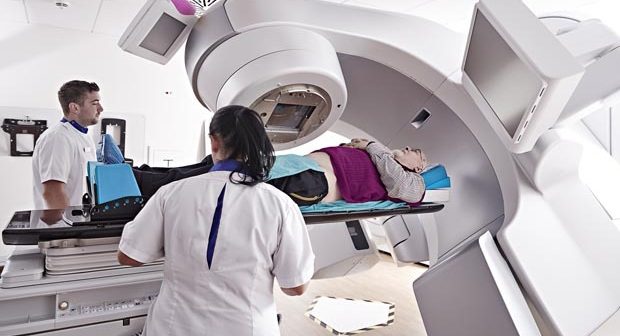
An international panel of cancer experts has recommended a one-week course of radiotherapy and delaying surgery as the best way to treat patients with bowel cancer during the COVID-19 pandemic. The short course of treatment involves higher-intensity radiation rather than five weeks of radiotherapy coupled with chemotherapy. Surgery, which normally happens one to two weeks after radiotherapy, can be safely delayed by up to 12 weeks, say the expert panel. This approach, based on the latest research evidence, will maintain the best chance of successfully treating the disease while at the same time reducing the side effects of treatment and…

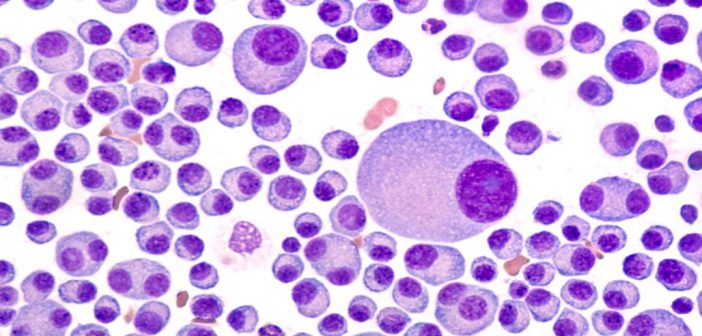
A case study of a patient in Wuhan, China, suggests that the immunosuppressant tocilizumab may be an effective COVID-19 treatment for very ill patients who also have multiple myeloma and other blood cancers. The report, published in Blood Advances, also suggests that blood cancer patients may have atypical COVID-19 symptoms. The patient, a 60-year-old male who had been diagnosed with multiple myeloma in 2015 and was on maintenance therapy, was hospitalised in February for chest tightness and shortness of breath. Although he did not show symptoms of cough or fever, he tested positive for COVID-19 and his illness was classified as…

It has been announced that the primary endpoint was met in the predefined Step-1 analysis of its Phase 3 clinical trial of investigational vaccine OSE-2101, called Atalante 1, in HLA-A2 positive non-small cell lung cancer (NSCLC) patients after failure from immune checkpoint inhibitors (PD-1/PD-L1). In the Phase 3 Step-1 analysis, the statistically positive preliminary results show at least 12-month survival for 29 patients out of 63 patients in the OSE-2101 arm, corresponding to a 12-month survival rate of 46% with the lower limit (33%) of the 95% confidence interval* [33% – 59%], above the pre-specified futility boundary of 25%. Considering the…

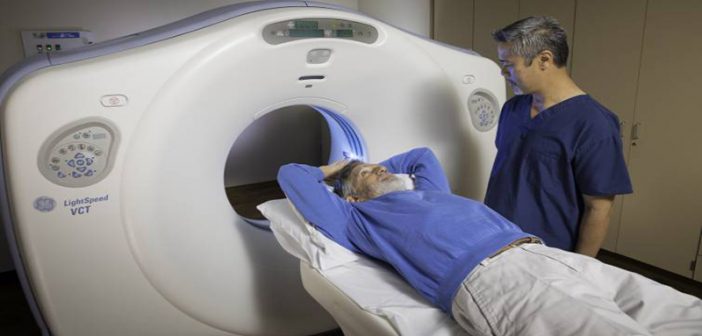
People who are at high risk of developing lung cancer, such as heavy smokers, are routinely screened with computed tomography (CT), which can detect tumours in the lungs. However, this test has an extremely high rate of false positives, as it also picks up benign nodules in the lungs. Researchers at MIT, USA, have now developed a new approach to early diagnosis of lung cancer: a urine test that can detect the presence of proteins linked to the disease. This kind of noninvasive test could reduce the number of false positives and help detect more tumours in the early stages…

Victorian Comprehensive Cancer Centre alliance and Monash Partners Comprehensive Cancer Consortium Join Forces to Coordinate Clinical Cancer Response to COVID-19 A new collaborative platform will launch today to help health professionals respond to the treatment and care needs of patients with cancer during the COVID-19 pandemic. People with cancer may be at increased risk of COVID-19 with potentially worse outcomes than individuals without cancer. The current pandemic raises critical clinical questions and challenges for health professionals seeking to continue optimal care for cancer patients. In this rapidly evolving crisis, with every aspect of health care under increasing pressure, there is…

The Breast Cancer Trials (BCT) Board of Directors have made the difficult decision to cancel BCT’s 42nd Annual Scientific Meeting (ASM) which was due to take place from 22-24 July 2020 in Auckland, New Zealand, due to the current situation concerning the spread of the coronavirus (COVID-19) and the unknown future impact this may have. We have a duty of care to our members, sponsors, staff, delegates and the wider community, to minimise the risk of further spread of the COVID-19. Collectively the Board felt it was also in the best interests of our members and guests to arrive at…

1 17 18 19 20