Browsing: COVID-19 Pandemic

The latest news effecting cancer patients and oncology service delivery during the COVID-19 pandemic

Most African countries including Ethiopia have recently adopted public health measures to contain the COVID-19 pandemic similar to developed countries. Confirmed COVID-19 cases are gradually increasing in Ethiopia with expected high impact due to the precarious economic situation. As part of the mitigation strategy for COVID-19, various health services are scheduled for an indefinite time. Cancer prevention measure are not part of the current guideline recommendations (1). Awareness creation, screening, early detection, diagnosis and treatment are key community level interventions for cancer control in Ethiopia. Postponement of cancer prevention activities during COVID-19 pandemic could also have an unprecedented impact as…

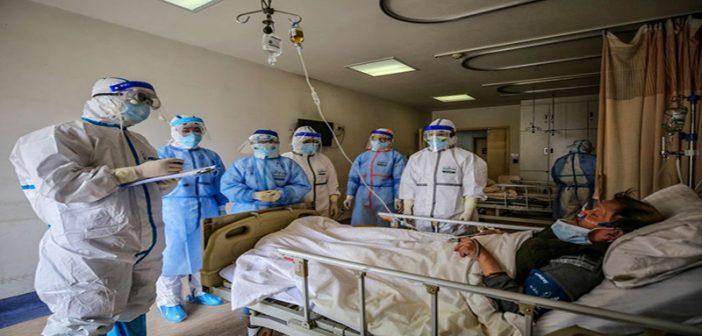
Researchers from MSK Kids at Memorial Sloan Kettering Cancer Center (MSK), USA, found that children with cancer are not at a higher risk of being affected by COVID-19. This new research led by Andrew Kung, MD, PhD, Chair of MSK Kids and his colleagues was published in JAMA Oncology. MSK Kids is one of the largest paediatric cancer programs in the United States with a patient population that includes children, adolescents and young adults with cancer and a small proportion with non-oncological diseases such as bone marrow failure and immunodeficiencies. Paediatric cancer patients are no more vulnerable than other children to…

A study of 4532 men in the Veneto region of Italy has found that those who were being treated for prostate cancer with androgen-deprivation therapies (ADT) were less likely to develop the coronavirus COVID-19 and, if they were infected, the disease was less severe. The authors of the study, published in the leading cancer journal Annals of Oncology, say their findings suggest ADT appears to protect men from COVID-19 infection. The researchers, led by Professor Andrea Alimonti, from the Università della Svizzera Italiana (Bellinzona, Switzerland), found that out 4532 men infected with COVID-19, 9.5% (430) had cancer and 2.6% (118) had…

The Institute of Cancer Research, London, UK, has broadly welcomed the approval of targeted hormone therapies enzalutamide and abiraterone as first-line NHS treatments for men with advanced prostate cancer. Its experts said newly published interim guidance by NHS England was an example of how modern treatments that can be taken at home could relieve pressure on the NHS during the coronavirus pandemic. But The Institute of Cancer Research (ICR) was also critical of NHS England for taking so long over its recommendation, and for limiting use of abiraterone only to patients who could not take enzalutamide. Standard treatment for men…

Largest study of cancer patients with COVID-19 provides guidance on how to protect this vulnerable population People with cancer who develop COVID-19 are much more likely to die from the disease than those without cancer, according to physician-researchers at Montefiore Health System and Albert Einstein College of Medicine, USA. The study, published in the online edition of Cancer Discovery, is the largest so far to assess outcomes for patients with cancer who have also been infected with COVID-19. “Our findings emphasise the need to prevent cancer patients from contracting COVID-19 and – if they do – to identify and closely monitor…

Medical images for a wide range of diseases, including COVID-19, can now be more easily viewed, compared, and analyzed using a breakthrough web-based imaging platform developed by Massachusetts General Hospital (MGH), USA, and collaborating researchers. The Open Health Imaging Foundation (OHIF) web viewer was originally developed with grant support from the National Cancer Institute’s Informatics Technology for Cancer Research (NCI-ITCR) program for use in cancer imaging research and clinical trials, where it is already adopted by several leaders in the field. However, the OHIF Viewer and its underlying Cornerstone libraries and tools can also be used for any disease and…

As the UK government looks for an exit strategy to Britain’s COVID-19 lockdown a nanomedicine expert from The University of Manchester believes a care model usually applied to cancer patients could provide a constructive way forward. Kostas Kostarelos, is Professor of Nanomedicine at the University of Manchester, UK, and is leading the Nanomedicine Lab, which is part of the National Graphene Institute and the Manchester Cancer Research Centre. The Manchester-based expert believes more scientific research should be employed as we transform how we view the COVID-19 pandemic, or any future virus outbreak, and deal with it more like a chronic…

A new expert panel consensus statement published simultaneously today in the journals Radiology: Imaging Cancer, Chest and the Journal of the American College of Radiology provides guidance to clinicians managing lung cancer screening programs and patients with lung nodules during the COVID-19 pandemic. In many parts of the world, the COVID-19 public health crisis has stressed the health care system close to or even past its breaking point. Hospital resources are focused on the immediate needs of patients suffering from the disease, particularly those who are critically ill. The strain on health care systems and the need to control the virus using containment and…

Thousands of cancer patients in the UK have had their treatment stopped or delayed because of COVID-19, and with pressures mounting on the health service, Cancer Research UK calls for widespread testing to prevent unnecessary cancer deaths. The global pandemic has caused enormous disruption to cancer services across the country including delays to cancer treatment, screening and diagnosis, and profound decreases in patients being urgently referred to hospital with suspected cancer symptoms. In some cases, already overstretched NHS staff are being directed away from cancer care, towards caring for COVID-19 patients. And in other cases, where a cancer patient might…

Netherlands Cancer Institute, Cancer Research UK Cambridge Centre and five other leading European cancer centres share knowledge and experiences to define new guidelines for treating cancer patients during the COVID-19 pandemic In this joint effort, the centres offer guidance to institutions globally by outlining their general consensus measures and organisational strategies adopted to make their operations “pandemic proof”. In the space of just a few weeks, the European cancer centres have had to drastically revise and reorganise their patient care and scientific research due to the coronavirus crisis. For example, treatments have been postponed or adjusted to protect the immune…

1 16 17 18 19 20