

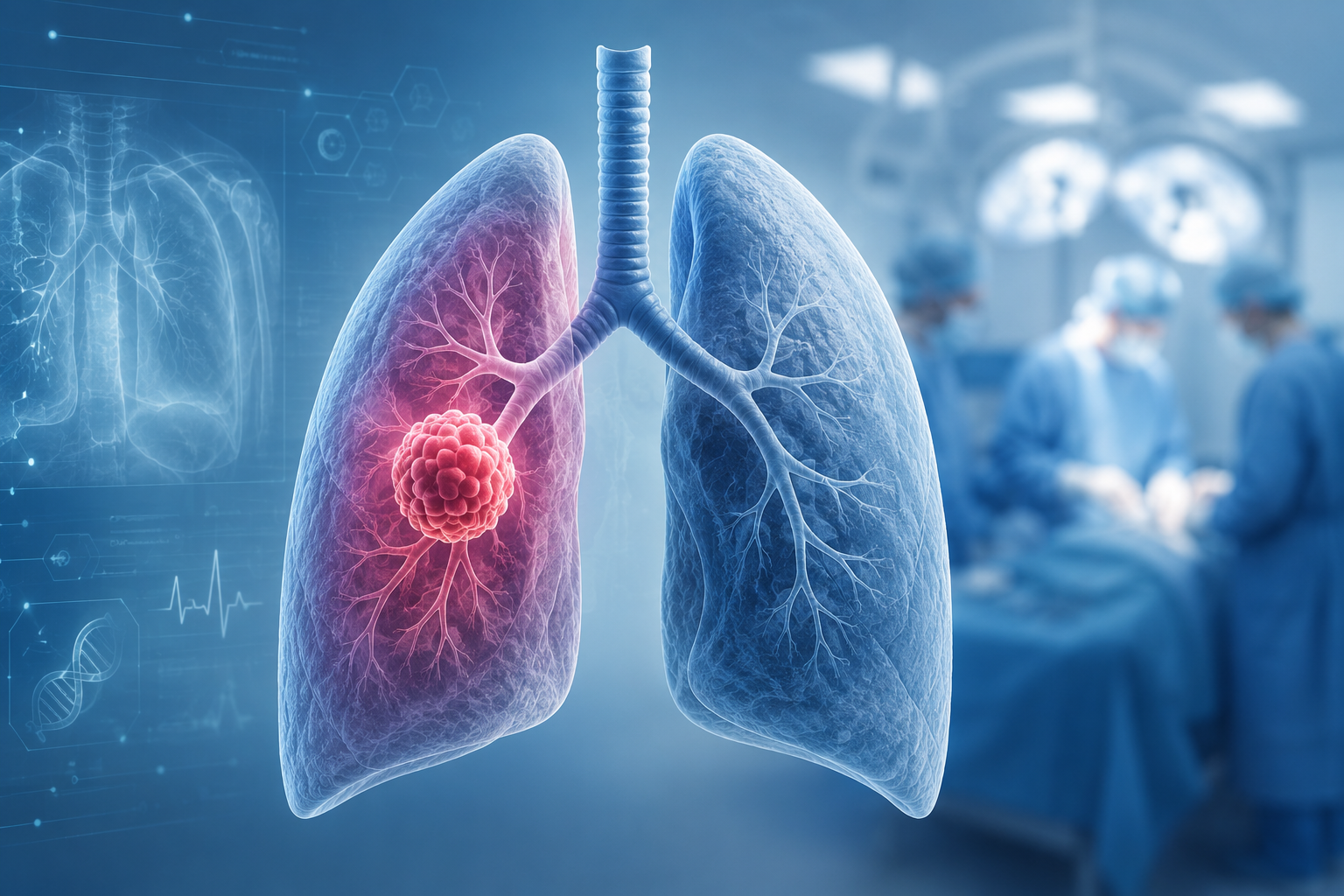
Lung transplantation may offer a potential treatment option for a highly selected group of patients with medically refractory, lung-limited stage IV non-small cell lung cancer (NSCLC), according to a prospective study published in JAMA. The findings challenge the long-held view that active lung cancer should be considered an absolute contraindication to transplantation, although the authors stress that the approach remains experimental and requires validation in larger studies.
Researchers from Northwestern University evaluated outcomes from the prospective, single-centre DREAM (Double Lung Transplant Registry for Lung-Limited Malignancies) registry study, which enrolled patients with advanced NSCLC whose disease remained confined to the lungs despite exhausting all recommended systemic treatment options. 
Historically, lung transplantation has not been offered to patients with active lung cancer because of concerns about recurrence under immunosuppression and poor long-term survival. However, advances in cancer staging, molecular profiling, systemic therapies and transplant techniques prompted investigators to revisit whether carefully selected patients with disease limited to the lungs could benefit from complete removal of all visible pulmonary disease through bilateral lung transplantation.
Dramatic difference in early survival
The study included 98 patients with medically refractory stage IV NSCLC confined to the lungs. Seventeen underwent lung transplantation, while 81 patients who met the same biological eligibility criteria received medical management alone because of logistical, financial or geographic barriers preventing transplantation.
All transplant recipients were experiencing respiratory failure, with many requiring high-flow oxygen or mechanical ventilation at the time of evaluation.
After a median follow-up of 343 days from transplant eligibility assessment, no deaths had occurred among the transplant recipients during the primary study period. In comparison, 52 of the 81 medically managed patients had died.
Estimated one-year overall survival was:
- 100% following lung transplantation
- 40.8% with medical management alone
This translated to an absolute survival difference of 59.2 percentage points.
Although two transplant recipients had died by the extended follow-up in January 2026, the findings continued to suggest substantially better survival than would typically be expected for this patient population.
Strict patient selection
The investigators emphasised that transplantation was reserved for an exceptionally small subset of patients.
Eligible participants had:
- confirmed stage IV NSCLC confined entirely to the lungs
- exhausted guideline-recommended systemic therapies, including targeted therapies, immunotherapy and clinical trials where appropriate
- no evidence of disease outside the lungs following comprehensive imaging and invasive mediastinal staging
- acceptable transplant eligibility based on standard transplant criteria.
The surgical procedure also differed from conventional lung transplantation. Surgeons employed a dissemination-minimising technique that included early pulmonary vein control, removal of both diseased lungs before implantation of donor lungs, and extensive airway and chest cavity irrigation to reduce the risk of tumour spread during surgery.
Recurrence remained uncommon during early follow-up
Only four of the 17 transplant recipients developed clinically evident recurrence or progression during follow-up, compared with 74 of 81 patients receiving medical management.
Estimated one-year recurrence- or progression-free survival was 92.3% in the transplant group versus just 5.6% in the medically managed cohort.
Estimated one-year recurrence- or progression-free survival was 92.3% in the transplant group versus just 5.6% in the medically managed cohort. The authors caution, however, that much longer follow-up is required to determine the durability of disease control, particularly given the lifelong immunosuppression required after transplantation.
Comparable transplant outcomes
Importantly, outcomes after transplantation were comparable with those of patients undergoing lung transplantation for non-cancer conditions.
Among 306 patients transplanted for end-stage pulmonary disease during the same period, one-year post-transplant survival was 88.1%, compared with 100% in the NSCLC transplant cohort.
Postoperative complications, including acute kidney injury, rejection, stroke and intensive care stay, were broadly similar between the two groups despite the greater complexity of cancer surgery. Important limitations
Despite the striking results, the authors acknowledge several important limitations.
The study was conducted at a single, highly specialised transplant centre and involved only 17 transplant recipients. The comparison group was not randomised, meaning unmeasured differences between groups cannot be excluded.
In addition, the follow-up remains relatively short, making it impossible to determine whether the early survival advantage will translate into durable long-term disease control or cure.
The researchers conclude that lung transplantation should currently be viewed as a highly specialised salvage strategy for an exceptionally selected group of patients, rather than a treatment applicable to the broader population of patients with stage IV NSCLC.
Paper: Bharat A, Kurihara C, Chung LI, et al. Lung Transplant for Refractory Lung-Limited Stage IV Non–Small Cell Lung Cancer. JAMA. Published online July 08, 2026. Access online here.
