

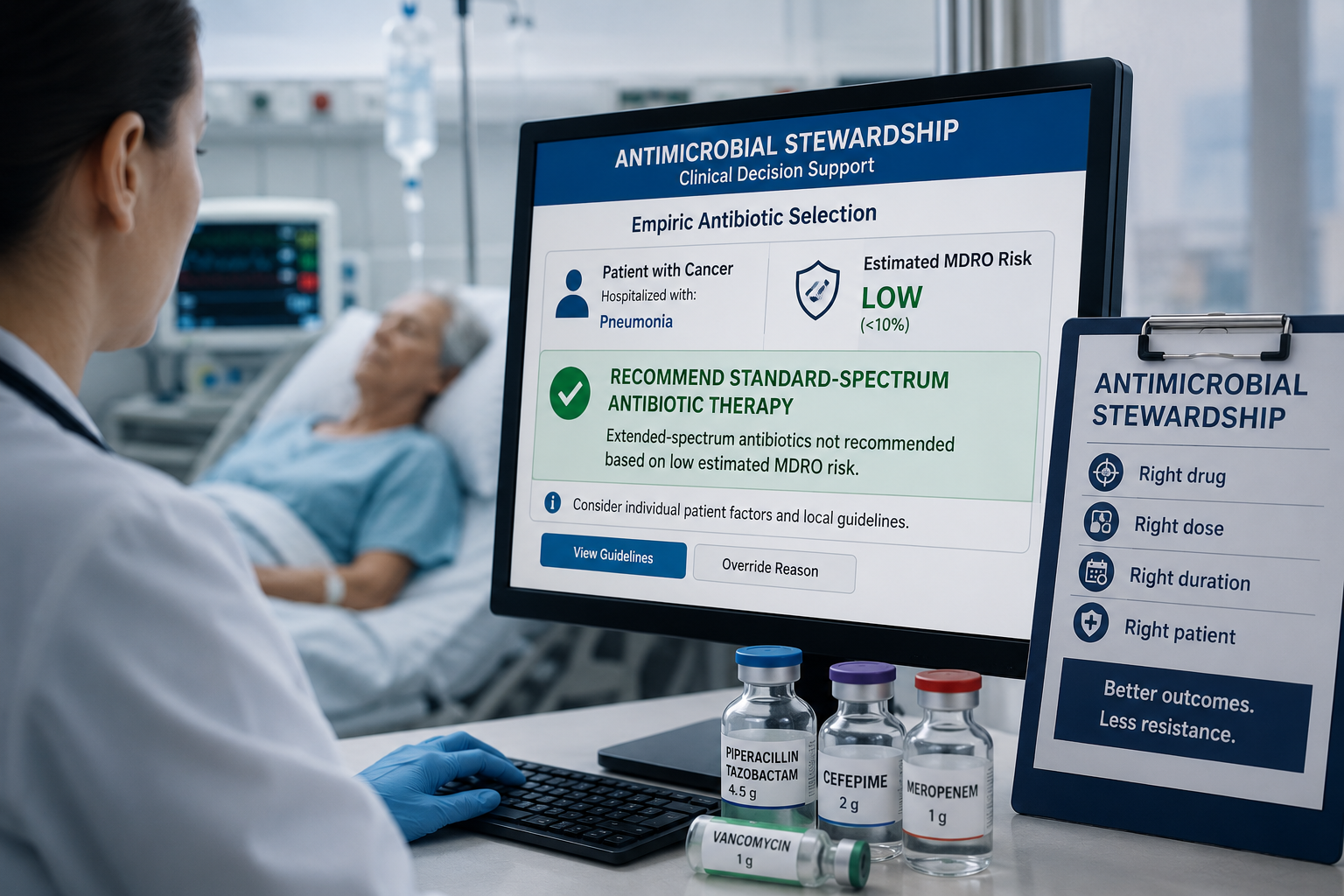
A clinical decision-support intervention helped reduce the use of broad-spectrum antibiotics among hospitalised patients with cancer and suspected infection without adversely affecting key clinical outcomes, according to a secondary analysis of the INSPIRE trials published in JAMA Network Open.
Patients with cancer are at increased risk of serious infections due to disease-related and treatment-related immunosuppression. As a result, broad-spectrum antibiotics are frequently prescribed empirically when infection is suspected. While this approach can be lifesaving, prolonged or unnecessary use of broad-spectrum agents may contribute to antimicrobial resistance, adverse events and disruption of the microbiome.
 REGISTER FOR BREAST CANCER TRIAL’S ANNUAL SCIENTIFIC MEETING | JULY 2026
Researchers conducted a secondary analysis of the cluster-randomised INSPIRE trials to evaluate the impact of an antimicrobial stewardship intervention among hospitalised adults with cancer receiving empiric antibiotic therapy for suspected infection.
The intervention combined computerized provider order entry prompts, patient-specific risk estimates for multidrug-resistant organisms, clinician education and prescribing feedback to support empiric antibiotic selection. Clinicians were encouraged to prescribe standard-spectrum antibiotics when patients were assessed as having a low risk of multidrug-resistant infection.
The secondary analysis included 36,861 patients with cancer who were hospitalised with pneumonia, urinary tract infection, skin and soft tissue infection, or abdominal infection. Compared with usual care, the intervention was associated with significant reductions in extended-spectrum antibiotic use, including a 27% reduction among patients with pneumonia, a 24% reduction among those with urinary tract infections, a 17% reduction among patients with skin and soft tissue infections, and a 24% reduction among those with abdominal infections.
 LISTEN TO DR NIARA OLIVEIRA + DR VIVEK RATHI BUSTING SOME BRCA MYTHS!
Importantly, the reduction in broad-spectrum antibiotic exposure was not associated with increases in mortality, intensive care unit admission or other key adverse clinical outcomes.
The findings suggest that stewardship interventions may help optimise antibiotic prescribing in oncology settings without evidence of adverse effects on key clinical outcomes.
Antimicrobial stewardship has become an increasingly important component of cancer care as concerns grow regarding antimicrobial resistance and the potential consequences of unnecessary antibiotic exposure.
The authors noted that patients with cancer often present unique challenges for stewardship programs due to the potentially serious consequences of undertreating infection. Consequently, clinicians may be reluctant to narrow antibiotic coverage even when available clinical information suggests a lower risk of resistant pathogens.

According to the researchers, the results demonstrate that carefully designed stewardship interventions can reduce unnecessary exposure to extended-spectrum antibiotics while maintaining high-quality patient care.
The study’s limitations included its secondary-analysis design and the fact that participating hospitals were involved in stewardship-focused clinical trials, which may limit the generalisability of the findings to other healthcare settings.
Nevertheless, the results provide evidence that antimicrobial stewardship initiatives can be successfully integrated into oncology care and may help address one of the growing challenges facing modern cancer management.
Paper: Gohil SK, Avery TR, Kleinman K, et al. Improving Empiric Antibiotic Selection for Patients With Cancer Hospitalized With Infection: Secondary Analysis of the INSPIRE Cluster Randomized Trials. JAMA Netw Open. 2026;9(6):e2616611. Access online here.