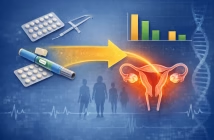


Machine-learning–predicted insulin resistance was associated with increased risk of multiple cancer types in a large population analysis published in Nature Communications.
Insulin resistance is a key metabolic abnormality underlying type 2 diabetes and is strongly linked to obesity and chronic inflammation. Although previous research has suggested a relationship between insulin resistance and cancer risk, large-scale epidemiological evidence has been limited, partly because insulin resistance is not routinely measured directly in clinical practice.
CLINICAL SUMMARY
What was examined
Researchers applied a machine-learning model that predicts insulin resistance using nine routine clinical parameters to a large population cohort from the UK Biobank to examine associations with cancer risk.
Key findings
-
Higher AI-derived insulin resistance scores were associated with increased risk of multiple cancers.
-
Associations were observed for uterine, kidney, oesophageal, pancreatic, colorectal, and breast cancers, among others.
-
Higher predicted insulin resistance was associated with an approximately 25% increased overall cancer risk in adjusted analyses.
Clinical implications
-
Insulin resistance may represent an important metabolic risk factor across multiple tumour types.
-
Machine-learning models using routine clinical data may help identify individuals with higher predicted metabolic risk.
-
Further research is needed to clarify causal relationships and potential prevention strategies.
To address this challenge, researchers developed a machine-learning model designed to estimate insulin resistance using nine routinely measured clinical parameters, including age, body mass index, fasting glucose, glycated haemoglobin, and lipid markers. The resulting metric, termed artificial intelligence–derived insulin resistance (AI-IR), estimates insulin resistance without requiring specialised tests such as the hyperinsulinaemic–euglycaemic clamp.
The researchers applied the model to data from the UK Biobank, enabling analysis of metabolic risk and cancer incidence across a large population cohort.

Featured Event
Across the cohort, higher AI-IR scores were associated with increased risk of several cancers, including uterine, kidney, oesophageal, pancreatic, colorectal,l and breast cancers, among others. When analysed as a composite outcome, higher predicted insulin resistance was associated with an approximately 25% increased overall cancer risk after adjustment for age and sex.
The AI-derived measure also showed stronger predictive performance for diabetes risk than several commonly used metabolic markers.
Researchers note that insulin resistance may contribute to tumour development through several biological pathways, including hyperinsulinaemia and chronic inflammation, which can promote cellular proliferation and create a pro-tumour environment.
Because the AI-IR model relies on clinical variables commonly collected during routine health checks, the authors suggest it may help identify individuals with higher predicted metabolic risk in research settings. However, the findings are observational, and further studies will be required to determine whether interventions targeting insulin resistance influence cancer risk.
Paper: Lee, CL., Yamada, T., Liu, WJ. et al. Machine learning-predicted insulin resistance is a risk factor for 12 types of cancer. Nat Commun 17, 1396 (2026). Access online here.