

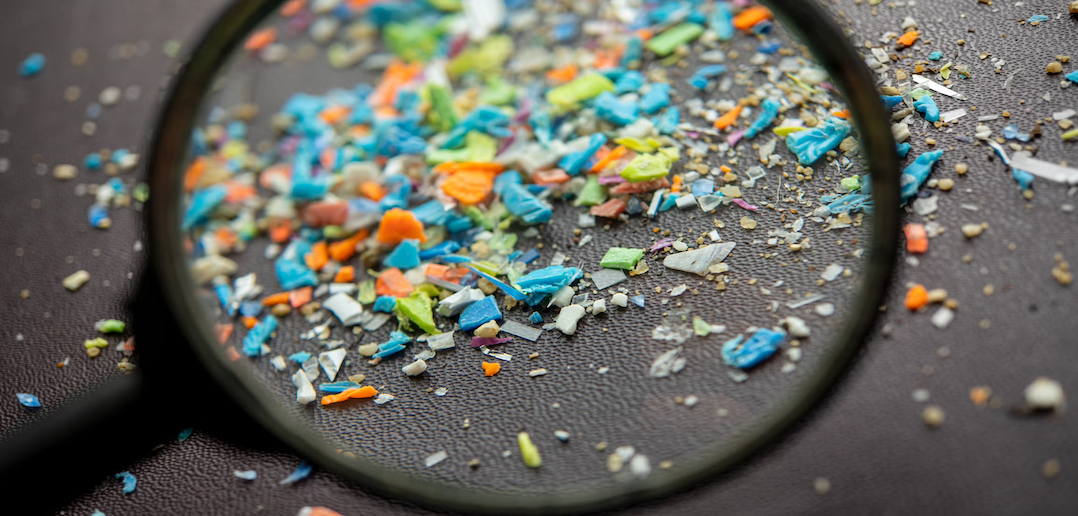
Small fragments of plastic were found in nine out of 10 patients with prostate cancer, and in higher levels inside tumours than in nearby noncancerous tissue, a new study finds.
The small, single-centre study was led by researchers at NYU Langone Health, its Perlmutter Cancer Center, and its Center for the Investigation of Environmental Hazards, USA. It explored the potential role of plastic exposure in the development of prostate cancer, which is the most common cancer among American men, according to the American Cancer Society.
Experts have found that when plastic from food packaging, cosmetics, and other sources is used, heated, or chemically treated, it can break down into smaller pieces and become ingested. People are also exposed to plastics by inhaling them from the air and by absorbing them through the skin. Past studies have identified these microplastics in nearly every human organ, as well as in bodily fluids and the placenta. However, how they may affect human health has remained poorly understood.
Analysing tissue samples collected from 10 patients with prostate cancer, the research team identified plastic particles in 90% of tumour samples and 70% of benign tissue samples.
HER2 Uncovered: From Low to Ultralow – Get the Low Down with Ben Dessauvagie & Gelareh Farshid

In addition, the cancerous tissue contained on average 2.5 times the amount of plastic as the healthy prostate tissue samples (about 40 micrograms of plastic per gram of tissue compared with 16 micrograms per gram).
“Our pilot study provides important evidence that microplastic exposure may be a risk factor for prostate cancer,” said study lead author Stacy Loeb, MD, a professor in the NYU Grossman School of Medicine’s Departments of Urology and Population Health.
According to Loeb, while early data had suggested a link between microplastics and other health conditions such as heart disease and dementia, there had been little direct evidence connecting the substances to prostate cancer.
Presenting during the American Society of Clinical Oncology’s Genitourinary Cancers Symposium on Feb. 26, the new study is the first Western assessment of its kind to examine microplastic levels in prostate tumours and to compare them with plastic buildup in noncancerous prostate tissue, says Loeb.
For the investigation, the researchers evaluated patients with prostate cancer who were undergoing a surgical procedure to remove the entire organ. The team analysed tumour and benign samples visually and then used specialized equipment to determine the amount of microplastic particles, as well as their chemical composition and structure, in the tissue. The scientists focused on 12 of the most common types of plastic molecules.
To avoid contaminating the samples with the many kinds of plastic in common medical and laboratory equipment, the team substituted its tools with those made of aluminum, cotton, and other nonplastic materials. They also handled the samples in highly controlled spaces known as clean rooms that are designed to process samples for microplastic analysis.
“By uncovering yet another potential health concern posed by plastic, our findings highlight the need for stricter regulatory measures to limit the public’s exposure to these substances, which are everywhere in the environment,” said study senior author Vittorio Albergamo, PhD.
Albergamo, an assistant professor in the NYU Grossman School of Medicine’s Department of Paediatrics, adds that the research team’s next plans are to examine what the microplastics do in the body and how they might lead to cancer development. A possibility they plan to explore, he notes, is that the particles may prompt an overactive immune response (inflammation) in the tissue, which over time can damage cells and trigger genetic changes that cause cancer cells to form.
Albergamo cautions that a larger sample of patients will be needed to confirm the study findings.
About one in eight men in the U.S. will be diagnosed with prostate cancer at some point in their lifetime, according to the Centers for Disease Control and Prevention.
Source: NYU Langone
