

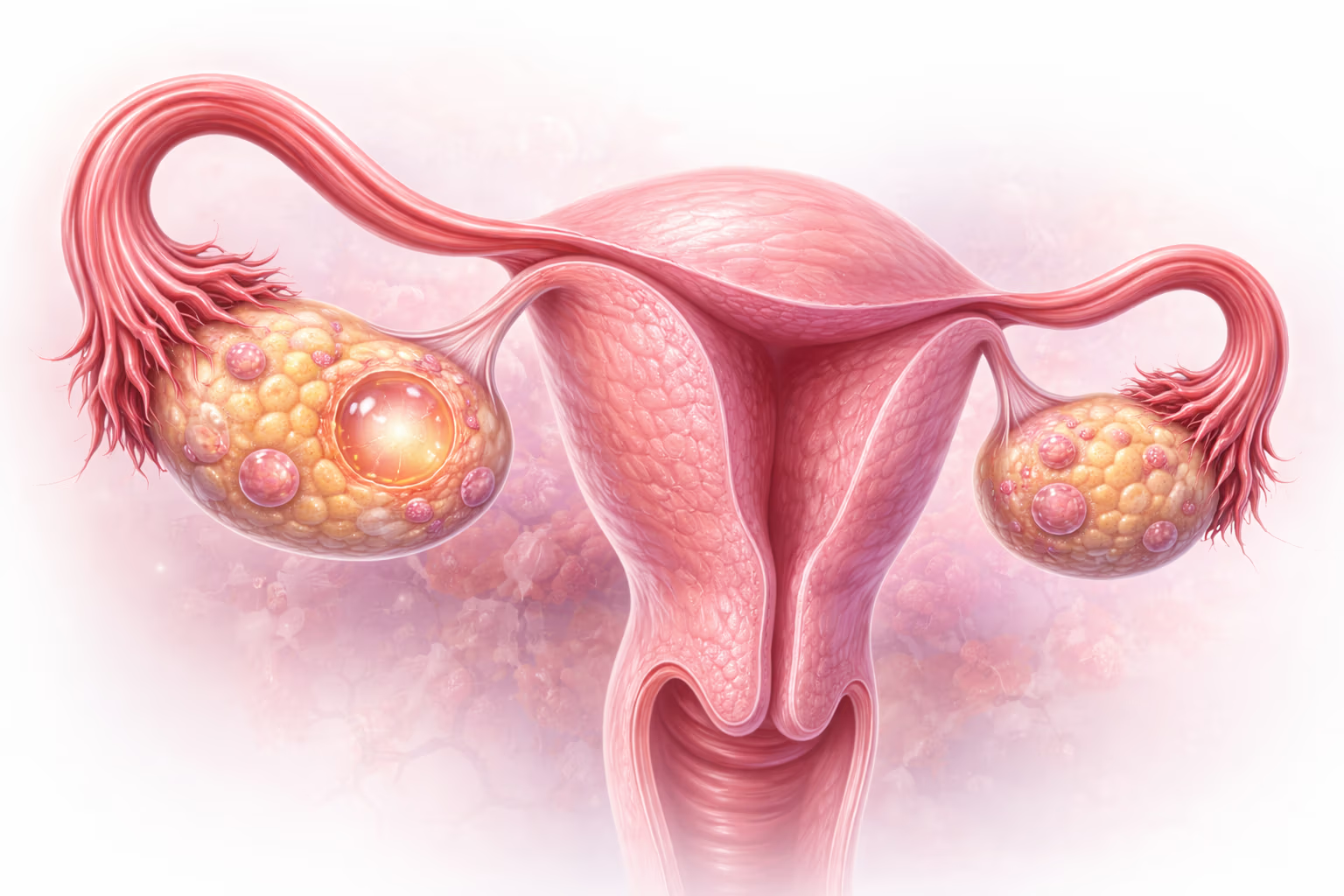
A new expert consensus published in JAMA supports the use of opportunistic salpingectomy as a preventive strategy for tubo-ovarian carcinoma, based on growing biological and epidemiological evidence linking many high-grade serous ovarian cancers to the fallopian tube epithelium.
High-grade serous carcinoma, the most common and lethal form of epithelial ovarian cancer, is now thought in many cases to arise from precursor lesions in the fallopian tubes rather than the ovary itself. This shift in understanding has prompted interest in removing the fallopian tubes at the time of unrelated pelvic surgery to reduce future cancer risk without performing a separate preventive operation.
CLINICAL SUMMARY
What was examined
An international expert working group reviewed the evidence for opportunistic salpingectomy — removal of the fallopian tubes during unrelated pelvic or abdominal surgery — as a strategy to reduce the risk of tubo-ovarian carcinoma.
Key findings:
- Observational studies consistently show an association between opportunistic salpingectomy and a reduced risk of subsequent tubo-ovarian carcinoma.
- The procedure adds minimal operative time and does not appear to adversely affect short-term ovarian function.
- Evidence is derived largely from cohort and registry studies rather than randomised trials, and long-term endocrine outcomes remain incompletely characterised.
Clinical implications:
- Opportunistic salpingectomy should be considered and discussed with women undergoing relevant pelvic surgery as a potential cancer risk-reduction strategy.
- Counselling should emphasise that risk reduction is likely but not absolute, as not all ovarian cancer subtypes originate in the fallopian tube.
- Ongoing follow-up and further prospective research are needed to clarify long-term effects and the magnitude of benefit.
An international, multidisciplinary panel conducted a structured literature review and used a formal consensus process to develop evidence-based statements on feasibility, safety, and clinical implementation. Agreement was achieved on a series of recommendations addressing patient selection, counselling, and operative considerations.
Across multiple population-based and cohort studies, opportunistic salpingectomy has been associated with a significantly lower incidence of tubo-ovarian carcinoma compared with no salpingectomy. The procedure typically adds little operative time and has not been shown to compromise ovarian reserve or precipitate early menopause in the short term.

Featured Event
However, the panel noted important limitations. The available evidence is predominantly observational, and randomised controlled trials are lacking. In addition, while many ovarian cancers appear to originate in the fallopian tube, this is not true for all histological subtypes, meaning salpingectomy is unlikely to eliminate risk.
The consensus supports incorporating opportunistic salpingectomy into routine practice where appropriate, particularly during hysterectomy or sterilisation procedures.
HER2 Uncovered: From Low to Ultralow – Get the Low Down with Ben Dessauvagie & Gelareh Farshid

Importantly, clinicians are encouraged to frame the intervention as a risk-reduction measure rather than a definitive preventive strategy. Discussions should include both the potential benefit and the current uncertainties, particularly regarding long-term ovarian function and absolute risk reduction.
By integrating cancer prevention into standard surgical care, opportunistic salpingectomy represents a pragmatic approach to reducing the burden of tubo-ovarian carcinoma, while underscoring the need for continued long-term data and prospective evaluation.
Paper: Piek JM et al. Opportunistic Salpingectomy for Prevention of Tubo-Ovarian Carcinoma: The European Society of Gynaecological Oncology Consensus Statements. JAMA. Published online February 02, 2026. doi:10.1001/jama.2025.24510. Access online here.