
Radical prostatectomy (RP) remains a cornerstone treatment for localised prostate cancer, with more than 85% cancer-specific survival at 10 years. Yet for many men, the operation brings an unwelcome side effect: urinary incontinence (UI). Early postoperative UI—typically defined as persistent leakage three months after surgery—affects between 25% and 86% of patients, disrupting quality of life, hampering return to work and social activity, and often causing significant psychological distress.
UI after RP is usually due to damage to the urinary sphincter or its innervation, leading to stress urinary incontinence (SUI). Current treatment options are limited. Surgical interventions such as artificial urinary sphincters or slings carry risks of infection and mechanical failure. Pelvic floor muscle training (PFMT) can help, but offers only modest benefit, and pharmacological treatments lack robust evidence. This leaves a clear unmet need for safe, non-invasive therapies that accelerate continence recovery.
LISTEN FOR THE LATEST RESEARCH, ANALYSIS AND A GOOD DOSE OF HUMOUR…

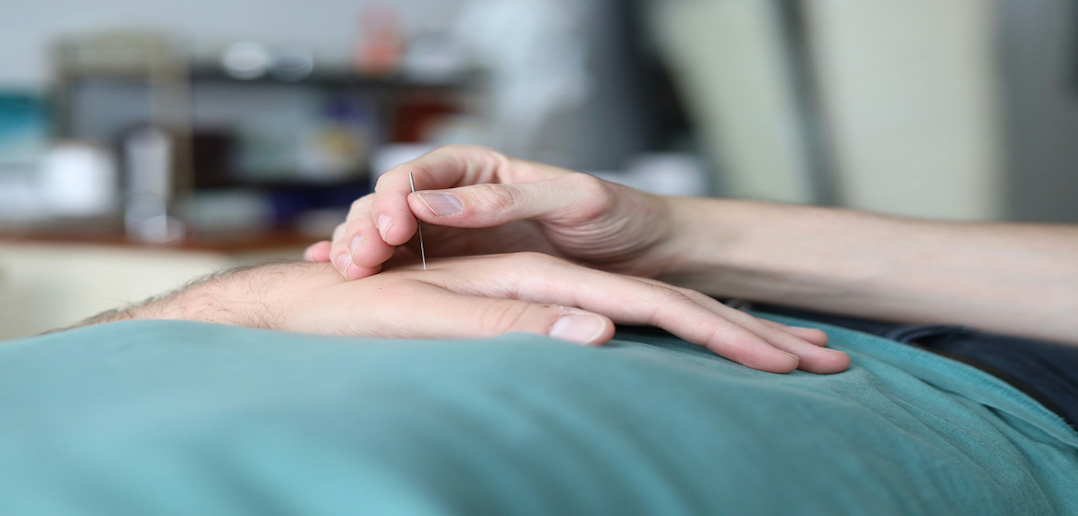
A randomised clinical trial, reported in JAMA Network Open, conducted at Nanjing Drum Tower Hospital, Nanjing University, has now reported that electroacupuncture may offer such a solution. Electroacupuncture combines traditional Chinese medicine (TCM) acupoint theory with modern electrical stimulation to target sacral nerves involved in bladder and sphincter control. The technique is non-invasive, precise, and has already shown benefit in women with stress incontinence.
Trial design
The study enrolled 110 men (median age 69 years) with localised prostate cancer who had undergone robot-assisted RP and continued to experience UI 4–6 weeks postoperatively, using at least two pads per day. Participants were randomised to receive either electroacupuncture or sham stimulation, alongside standardised PFMT as part of usual care.
Electroacupuncture was applied to bilateral Baliao points (BL32–BL34), which correspond anatomically to sacral foramina near the micturition centre. Patients received 18 sessions over six weeks. The primary endpoint was urinary continence (UC), defined as the use of 0–1 pad per day, at six weeks.
Key findings
-
Continence recovery: At six weeks, 43.6% of men in the electroacupuncture group achieved continence compared with 21.8% in the sham group (relative risk 2.00; 95% CI, 1.12–3.59; P = .02).
-
Leakage volume: Median urine leakage fell by −320 g in the electroacupuncture group versus −200 g in the sham group (P < .001).
-
Pad use: Daily pad use dropped by a median of −1.0 in both groups, but the reduction was greater in the electroacupuncture arm (P = .02).
-
Quality of life: UI-related symptom scores (EPIC-CP) improved more in the electroacupuncture group (median −3 vs −2; P = .01).
-
Time to recovery: Kaplan–Meier analysis showed significantly faster continence recovery with electroacupuncture (HR 1.65; 95% CI, 1.06–2.58; log-rank P = .03). By 20 weeks, continence rates converged (76.4% vs 67.3%).
Adverse events were rare and mild. In the electroacupuncture group, two men experienced transient pain or bruising, while one sham participant reported local muscle spasms. No serious adverse events occurred.
Interpretation
The findings suggest that electroacupuncture accelerates the early recovery of continence after RP, likely through neuromodulation of sacral nerves. Notably, subgroup analysis indicated greater benefit in men who underwent nerve-sparing surgery. Although long-term continence outcomes equalised by five months, the earlier return to continence with electroacupuncture may reduce psychological burden and improve short-term quality of life.
Limitations include the single-centre design, reliance on patient-reported pad use rather than bladder diaries, and exploratory subgroup analyses that require confirmation. Larger multicentre studies with objective urodynamic endpoints are needed to validate these results and clarify mechanisms.
Conclusion
Electroacupuncture significantly improved early continence recovery after radical prostatectomy, doubling the rate of continence at six weeks compared with sham treatment. With minimal side effects, this non-invasive intervention could represent a valuable addition to postoperative care in men with persistent incontinence.
Paper: Niu, J. et al. Electroacupuncture in Patients With Early Urinary Incontinence After Radical Prostatectomy: A Randomized Clinical Trial. JAMA Network Open. 2025;8(9):e2534491. doi:10.1001/jamanetworkopen.2025.34491