
In the first clinical trial of an immunotherapy agent for people with high-risk smouldering myeloma (HR-SMM) – a precursor of multiple myeloma – a bispecific antibody therapy eliminated all signs of the condition in every patient evaluated to date, Dana-Farber Cancer Institute researchers at the 65th American Society of Hematology (ASH) Annual Meeting and Exposition.
The trial, dubbed Immuno-PRISM, compared the safety and effectiveness of the bispecific antibody teclistamab to a combination of the drugs lenalidomide and dexamethasone in patients with HR-SMM.
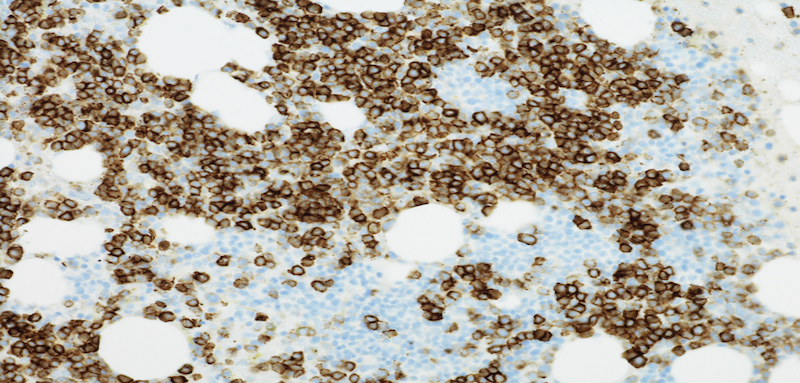
The condition, marked by an upsurge of monoclonal protein in the blood and high levels of plasma cells in the bone marrow, has no symptoms but often advances to multiple myeloma, a plasma cell cancer.
Of the 19 patients evaluated for the study, 12 received teclistamab, a bispecific antibody that binds both to tumour cells and cancer-fighting T cells, provoking an attack on the tumour cells.

LISTEN NOW ON THE ONCOLOGY NETWORK
The other seven were treated with dexamethasone and lenalidomide – a steroid and a drug that operates on the immune system, respectively.
A median of six months after beginning therapy, all patients treated with teclistamab had responded to the drug, showing reduced levels of M protein in the blood and urine and a decline in plasma cells in the bone marrow.
Most impressively, of the 12 patients in the teclistamab group who could be evaluated, all tested negative for minimal residual disease, meaning they showed none of the biological markers of
the condition at the deepest level of assessment in the bone marrow. At the most recent follow- up, none of the participants in the study had had their condition progress toward myeloma.
The results appear to exceed those achieved by teclistamab in patients with relapsed multiple myeloma, for whom the drug is currently approved.
The side effects of teclistamab were similar to those associated with the drug in earlier trials. Most patients receiving teclistamab experienced a mild case of cytokine release syndrome, a temporary inflammatory condition. Nine of the 12 patients in the group developed infections, most of which were low-grade.
 LISTEN NOW ON THE ONCOLOGY NETWORK
“We’re very encouraged by the substantial activity seen with teclistamab in patients with high-risk smouldering myeloma,” says the study’s lead author, Omar Nadeem, MD, of Dana-Farber Cancer Institute, who will present the findings at ASH.
“This trial suggests that early use of immunotherapy may have even greater benefit in this group of patients. We will continue to monitor participants to track the long-term benefit of this treatment.”
Source: ASH