
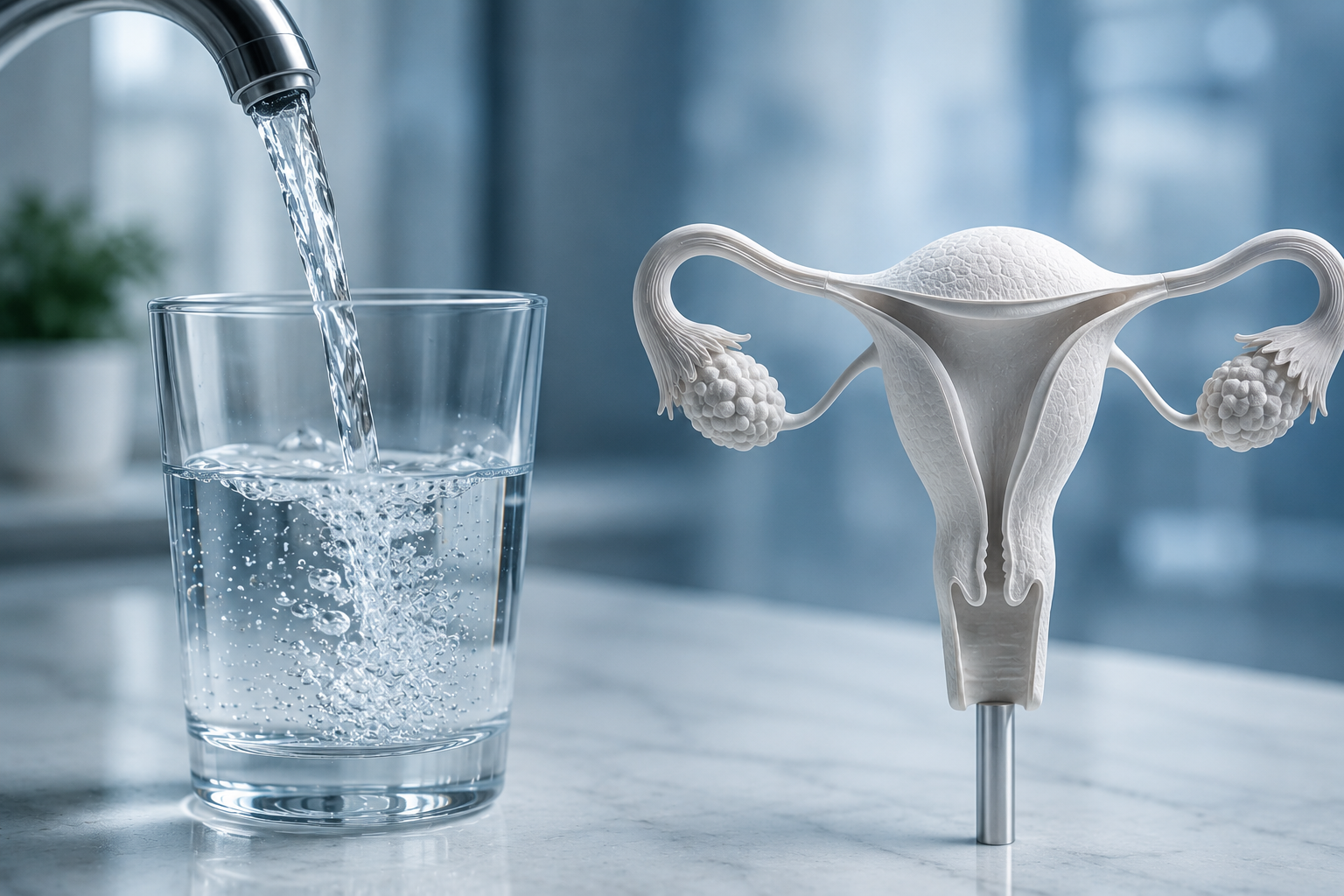
Long-term exposure to certain by-products of drinking water disinfection may be associated with an increased risk of uterine cancer, according to findings from a large prospective study published in JAMA Network Open.
Researchers analysing data from more than 53,000 women in the California Teachers Study found that higher levels of trihalomethanes (THMs) in public water supplies were associated with an increased risk of uterine cancer, particularly endometrioid tumours.
Drinking water can contain a range of regulated contaminants, including inorganic compounds such as nitrate, arsenic and uranium, as well as disinfection by-products formed when chemicals used to treat water react with naturally occurring organic matter.
Some drinking water contaminants, including disinfection by-products, are known or suspected carcinogens and have endocrine-disrupting properties. However, relatively little research has examined their potential relationship with uterine cancer.
For the new study, researchers assessed long-term exposure to THMs, haloacetic acids (HAAs), nitrate, arsenic and uranium among 53,100 female California educators who had lived at their enrolment address for at least 10 years.
Participants were cancer-free and had not undergone hysterectomy when they joined the California Teachers Study in 1995–1996 and were followed until the end of 2020.
The researchers linked participants’ residential addresses with community water system monitoring data. For the main analyses, they calculated 15-year mean concentrations of THMs and inorganic contaminants from 1990 to 2005. HAA exposures were assessed using mean concentrations from 1990 to 2013, with follow-up for these analyses beginning in 2010.
During follow-up, 1,038 women developed uterine cancer, including 864 endometrioid and 154 non-endometrioid tumours.
Women in the highest third of total THM exposure had an 18% higher risk of uterine cancer compared with those in the lowest third, although the overall exposure trend narrowly missed conventional statistical significance. The association was stronger for endometrioid tumours, with a 23% higher risk and a statistically significant exposure trend.
Among individual THMs, the strongest associations were observed for chloroform. Women in the highest exposure group had a 27% higher risk of endometrioid tumours compared with those in the lowest group.
Mixture analyses examining several drinking water contaminants together also pointed towards THMs as important contributors. Each IQR increase in a contaminant mixture comprising individual THMs, nitrate, arsenic and uranium was associated with a 34% higher risk of endometrioid tumours, with chloroform and dibromochloromethane the largest contributors to the positive association.
The researchers also identified associations involving HAAs, another class of disinfection by-products. Higher levels of total HAAs were associated with an 86% increased risk of non-endometrioid tumours, although the authors cautioned that historical exposure data for these compounds were more limited.
No associations were observed between uterine cancer risk and long-term exposure to nitrate, arsenic or uranium in the main individual-exposure analyses.
The findings are broadly consistent with an earlier prospective study of postmenopausal women in Iowa, which also identified associations between drinking water disinfection by-products and endometrial cancer risk.
The researchers said several biological mechanisms could potentially explain the findings. Experimental studies have suggested that some THMs and HAAs may interact with estrogen receptors or have other endocrine-disrupting effects, while certain compounds have demonstrated mutagenic, genotoxic or oxidative effects.
However, the authors emphasised that the observational study cannot establish that exposure to disinfection by-products causes uterine cancer. Exposure estimates were based on community water system concentrations linked to residential addresses rather than individuals’ actual water consumption, and information on exposures before 1990 was unavailable.
The study population also consisted predominantly of highly educated female educators, which may limit the generalisability of the findings to other populations.
Despite these limitations, the researchers said the results add to emerging evidence that drinking water contaminants could represent potentially modifiable environmental risk factors for uterine cancer.
“In this cohort study of female California educators, we observed novel associations between THM exposures in drinking water and the risk of uterine cancer, particularly endometrioid histotypes,” the researchers concluded.
They called for further studies to investigate the potential relationship between long-term exposure to drinking water disinfection by-products and uterine cancer, particularly as incidence of the disease continues to rise worldwide.
Paper: Spaur M, Marcus Post L, Beane Freeman LE, et al. Drinking Water Contaminant Exposures and Risk of Uterine Cancer. JAMA Netw Open. 2026;9(7):e2624391. Access online here.