
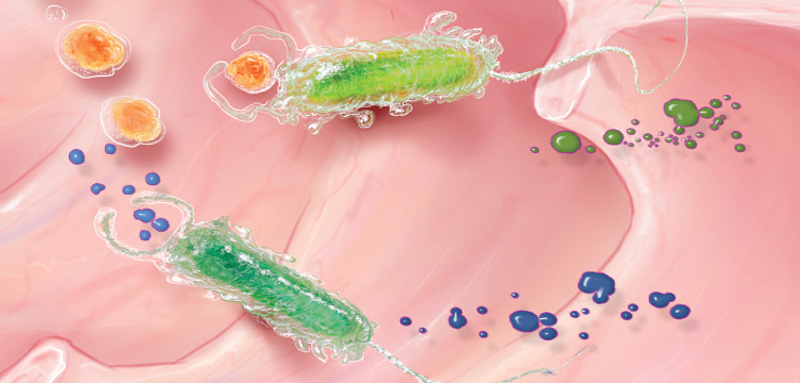
Recent research has shown that certain forms of E.coli bacteria tend to colonise hypoxic areas of the body, including tumours, suggesting they might play a role in cancer therapeutics.
A team of researchers at Dana-Farber Cancer Institute led by Dr. Romee in collaboration with Dr. Jiahe Li at the University of Michigan engineered gut-derived E.coli bacteria to express immune-activating cytokines on their surfaces, with the idea that the bacteria would move into the tumour and induce potent immune responses.
E.coli displaying murine decoy resistant IL18 demonstrated superior anti-tumour responses compared to immune checkpoint inhibitor therapy, with a 50-60% cure rate in mice.
The team also observed synergy between treatment with the engineered bacteria and immune checkpoint inhibitor therapy.
Treated tumour tissues revealed increased activity and infiltration of CD8+ T cells and NK cells.

LISTEN TO THE LATEST UPDATE ON HRD TESTING IN AUSTRALIA | WITH ANDREW FELLOWES AND JEFF GOH | ONCOLOGY NETWORK EXCLUSIVE
The therapy also enhanced the therapeutic efficacy of mesothelin targeting CAR NK cells in mice, suggesting the bacteria act as a “tumour GPS” for the systemically infused NK cells.
The study also demonstrated the safety and efficacy of this approach in multiple hard-to-treat tumours including mesothelioma.
The findings make a strong case for the evaluation of the approach alone or in combination with other immunotherapeutic strategies in early-phase clinical trials.
Immunotherapeutic approaches have substantially improved the treatment of patients with advanced malignancies.
However, most advanced and metastatic malignancies remain incurable and therefore represent a major unmet need.
This study uses genetically engineered live bacteria to stimulate immune responses and enhance the effects of immunotherapy strongly.
Source: Dana-Farber Cancer Institute