

Cure Brain Cancer Foundation – the major funder of brain cancer research in Australia – is inviting applications for its first Mid-Career Fellowship to mark World Cancer Day on Friday 4 February.
The Fellowship, worth up to $420,000, will provide three years’ support across salary and project funding, allowing researchers to continue their crucial work to improve outcomes for people affected by brain cancer.
Cure Brain Cancer Foundation CEO Lance Kawaguchi explains why the funding will provide much-needed stability to future leaders working in the field.
Commentary by Lance Kawaguichi:
At Cure Brain Cancer Foundation, increasing brain cancer survival and improving the quality of life for people living with this disease is at the core of everything we do. However, to achieve this, we need the best researchers working in the field.
It’s estimated only 3.5% of mid-career researchers will continue their careers in research, largely due to a lack of stability and funding opportunities. This is worrying because it creates a bottleneck situation where we’re losing talented brain cancer researchers and their important knowledge and skills from the field.
Brain cancer is classified as a ‘rare’ cancer and, as such, it’s disproportionately underfunded and under-researched compared to more common cancers, like breast cancer and lung cancer. This means opportunities for brain cancer researchers are often minimal.
We’re delighted to launch our first Mid-Career Fellowship this World Cancer Day to support promising mid-career researchers (6-15 years post-PhD), who are at greatest risk of leaving the research field.
In Australia, it’s rare for early and mid-career researchers to be employed on a full time or permanent contract. In fact, many researchers must apply for funding on an ongoing basis to maintain their salary and have the funds to conduct research projects. This grant writing is incredibly time consuming and minimises the time available to perform cutting edge research.
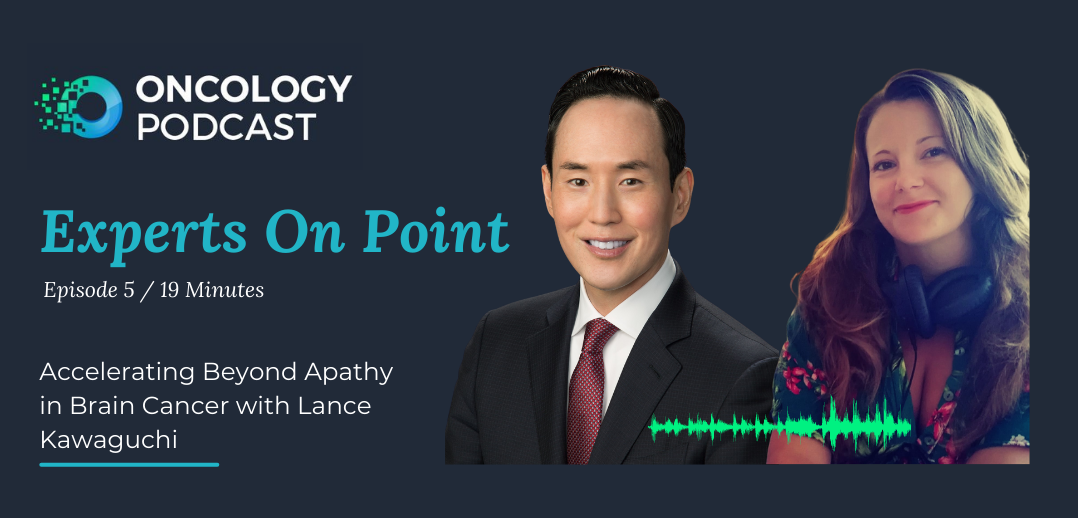
Lance Kawaguchi discusses funding issues in neuro-oncology research and much more in this podcast episode
By providing multi-year funding, our Fellowship aims to enable talented researchers to progress their work in finding innovative and effective treatments. It will remove the burden of having to apply for government or other philanthropic funding, allowing researchers to focus on improving outcomes for people affected by brain cancer and their families.
Why research is vital
Around 1,896 people are diagnosed with brain cancer in Australia annually and approximately 1,528 die from the disease every year 1 . It kills more children in Australia than any other disease and more people under 40 than any other cancer.
However, because it’s a rarer form of cancer, brain cancer research and therapy development has been historically under-funded and put into the ‘too hard basket’. Because of this, we have barely seen any change to standards of care for brain cancer in the last 30 years, and survival has remained static at around 22% during this time.
Brain cancer is one of the hardest cancers to treat given the unique environment of the brain as compared to other organs. Survival rates are abysmally low with just two in ten people surviving for five years past their diagnosis. Currently, standard treatment is a combination of three regimes:
- Surgery
If possible, this is usually the first form of treatment. However, depending on where the tumour is located in the brain, sometimes it is too risky to operate. When surgery is possible, great care must be taken to minimise damage to surrounding healthy brain tissue. Surgeons may be able to ‘de-bulk’ a portion of the tumour but are unable to take out all the cells, thereby requiring other treatments to remove the remaining cancer cells. - Chemotherapy
Chemotherapy has been the standard of care for many brain cancers for the last 30 years. However, many patients develop a resistance to the treatment. Research efforts are therefore focused on improving patient response to treatment, in addition to finding new treatments that can be used instead of, or alongside standard chemotherapy to improve survival. - Radiation therapy
Radiation therapy is commonly used for treating brain cancer. This form of therapy uses high energy x-rays to kill cancer cells, and works by damaging the DNA of quickly dividing cells. Whilst many tumours respond well, others can develop resistance to this form of therapy.
Apart from these above forms of treatment and their exhaustion, there are no other standard treatment options available for brain cancer patients.
Research is vital to not only improve the current forms of treatment, so that they are more effective, but also to investigate and bring to the market new therapies for this devastating disease.
Supporting brilliant minds
We hope our Mid-Career Fellowship will allow researchers to progress their pioneering ideas.
The Fellowship is an integral part of our Brilliant Minds program, which encourages early-career researchers to move into brain cancer and supports the growth of experienced researchers in the field.
The Foundation has invested more than $21 million into priority driven research. In 2021, we awarded an Early Career Fellowship of $345,000 to Dr Yolanda Colino Sanguino at the Cancer Epigenetic Biology and Therapeutics Group, Children’s Cancer Institute.
Dr Sanguino’s winning project focuses on diffuse intrinsic pontine glioma (DIPG), the most aggressive brain tumour in children. The project, Epigenetic Therapy in DIPG, will generate critical new knowledge on how tumour mutations drive cancer growth, to identify new drug targets and novel therapies for the currently incurable DIPG.
We also recently launched the world’s largest brain cancer-dedicated Clinical Accelerator. The program supports research discoveries in brain cancer through commercialisation and, ultimately, accelerates treatments to Australian patients as quickly as possible.
Mid-Career Fellowship details
Applications for our Mid-Career Fellowship will open on World Cancer Day, Friday 4 February, and close on Friday 8 April 2022.
The Fellowship is open to researchers across Australia and New Zealand and offers grants-in-aid of up to $420,000 over three years. This includes up to $120,000 salary, $15,000 for research consumables and $5,000 for travel and conferences per year.
Shortlisted applicants will be invited to attend virtual interviews with the Foundation’s Scientific Advisory Committee and their applications will be evaluated through a competitive, merit-based process.
To find out more about the Mid-Career Fellowship and other funding opportunities, please visit our website curebraincancer.org.au or contact [email protected].
References:
1 Ref: Australian Institute of Health and Welfare 2021. Cancer data in Australia. Cat. no. CAN 122. Canberra: AIHW.
Further Resources:
Funding Opportunities – Cure Brain Cancer Foundation