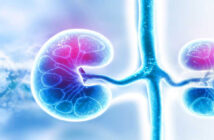


One of the biggest challenges treating kidney cancer is the wide number of tumour types that can present.
We are faced with multiple subtypes ranging from benign to aggressive. Even among the various subtypes, kidney cancers are genetically diverse with variable prognoses and treatment response rates.
The most common and aggressive is clear cell renal cell carcinoma (ccRCC), which accounts for around 90% of all cases.
The diagnosis of these lesions is key to deciding the best therapeutic approach. The current standard of diagnostic care is computed tomography (CT) and magnetic resonance imaging (MRI), methods which have high sensitivity for detecting small renal masses but low specificity(1). With these conventional imaging modalities it is not always possible to distinguish ccRCC from non-ccRCC(2).
Imaging options are further limited by the fact many current positron emission tomography (PET) agents are primarily excreted through the kidneys, decreasing the contrast in images between the lesions and normal tissue, therefore significantly limiting the ability to reliably identify these lesions(3). PET imaging is used often in other cancer types for staging disease and can be useful for identifying metastases.
Currently, the most accurate way to determine if an indeterminate renal mass detected on CT or MRI is malignant is through an invasive image-guided biopsy, an uncomfortable procedure carrying some risks for the patient.
Adding to the complexity is the fact many biopsies performed under conventional imaging guidance can turn out to be inconclusive(2).
There is a clear scientific need for a more accurate diagnostic technique for indeterminate renal masses, ideally eliminating the need for invasive biopsy or surgical resection – and to guide appropriate treatment management.
A non-invasive method of diagnosis presents reduced risk to the patient and potentially lowers short- and long-term cost burdens to public and private healthcare systems.
Surgery and removal of a mass or partial or complete nephrectomy should clearly be avoided if ongoing observation is more appropriate. In addition, if there is good reason to remove the mass, this should not be delayed. Accurate and efficient diagnostic techniques facilitate rapid decision-making and associated action.
While I have outlined the challenges, there are very good reasons to be optimistic.
Advances in nuclear medicine and our expanding knowledge of diagnostic, prognostic and predictive biomarkers are helping guide new approaches to care.
One of the most promising developments my team and I are excited about is a new investigational imaging agent that should allow us to accurately identify ccRCC.
This new diagnostic tool is a radiopharmaceutical known as TLX250-CDx (89Zr- DFO-girentuximab) designed specifically for the imaging of kidney cancers, which is being developed by Telix Pharmaceuticals, an Australian-headquartered Biotech.
The targeting agent is girentuximab radiolabelled with zirconium-89 (89Zr), a monoclonal antibody (mAb) that targets carbonic anhydrase IX (CA9), an enzyme that, in humans, is encoded by the CA9 gene.
CA9 is overexpressed in many types of cancer. The fact that it is expressed on the cell surface of over 90 per cent of ccRCC tumours but absent from normal kidney tissues makes it an ideal molecule for targeting of kidney cancers and potentially superior to previous attempts at renal imaging.
A 2019 study in the Netherlands concluded that imaging of TLX250-CDx with PET/CT significantly improved detection of kidney lesions. The 42-patient trial concluded that: the addition of 89Zr-DFO-girentuximab-PET/CT and 18FDG-PET/CT increases lesion detection compared to CT alone in newly diagnosed good and intermediate prognosis metastatic ccRCC patients eligible for watchful waiting(4).
89Zr is a cyclotron produced radioisotope with a long half-life of about three days.
There is an abundance of research on 89Zr and its suitability as a radioisotope for use in PET imaging.
Girentuximab labelled with 89Zr remains in circulation for at least 7 days, allowing for accumulation and concentration of radiation and ultimately in high resolution images(5).
My team and I, along with dozens of others around the world, are participating in a larger study sponsored by Telix Pharmaceuticals to confirm the use of this diagnostic agent for the rapid and accurate detection of ccRCC.
The study, called ‘ZIRCON’, is a Phase III international effort across 34 hospital sites in Australia, Canada, Europe and the USA involving up to 252 patients with an indeterminate renal mass suspected of ccRCC.
Interest among clinicians is strong and recruitment is progressing steadily.
The first patients were imaged in August 2019 and by July 2021 recruitment had passed 50 per cent, despite restricted COVID-19 hospital access.
The primary endpoints for the study include sensitivity and specificity of PET/CT imaging with TLX250-CDx to non-invasively detect ccRCC in patients with indeterminate renal masses using histology as a standard of truth.
All of us working in this area are very excited about the potential for this investigational product to help a patient population with few clinical options.
The importance and urgency of our work is underscored by the fact rates of renal cell carcinoma have more than doubled in the last 50 years(6) to the point where there were 430,000 new cases worldwide in 2020(7). That is over 1,000 every day.
We are cautiously optimistic about the early results .
From what we have seen to date, we believe this agent could have a major role in the evaluation of patients with renal masses when first diagnosed.
The ability to properly categorize and then appropriately treat a renal mass is of prime importance to urologists, interventional radiologists, and medical oncologists.
The potential to identify immune-resistant tumours with imaging is very exciting.
I think we are just touching the tip of the iceberg of the potential of this new technology.
KEY TAKE-HOME FACTS: Improving the diagnosis and treatment of kidney cancer
- A key to improving treatment and patient outcomes is better diagnosis.
- Kidney cancer is almost twice as common in men than women and majority of patients between the age of 60 and 70.
- The 5-year survival rate for early-stage kidney cancer is good and sits at around 90%. Survival decreases rapidly to 12% with the onset of metastatic disease(6).
- Most patients show no symptoms at diagnosis with tumours often detected while undergoing imaging for other conditions.
- The current standard of care for renal imaging is CT. Unlike for most other malignancies, application of fluorodeoxyglucose (FDG) PET/CT is limited, mainly because FDG is excreted through the kidneys, decreasing the contrast between renal lesions and normal tissue.
- Invasive biopsies can provide the answer as to what these lesions are, but they aren’t always successful.
- We need a non-invasive imaging approach that is highly sensitive and specific for a particular type of renal mass, such as clear cell renal cancer to improve clinical management and patient outcomes.
Professor Andrew Scott, Director of the Department of Molecular Imaging and Therapy, Austin Health, Melbourne, Australia
References:
- Kim et al., World Journal of Surgical Oncology, 2016. Access online here.
- Sanchez A et al., Journal of Clinical Oncology. 2018. Access online here.
- American Urological Association Guidelines. Access online here.
- Verhoeff et al., Eur J Nucl Med Mol Imaging. 2019. Access online here.
- Merkx R. et al., Eur J Nucl Med Mol Imaging 2021. Access online here.
- Padala SA et al., World J Oncol. 2020. Access online here.
- Globocan 2021. Access online here.